
18 September 2026
What A New Roof Costs In Southport In 2026: A Price Guide By Roof Type And House Type
Real 2026 brackets for a full re-roof in Southport, sorted by house type and covering, with every line of the quote taken apart - scaffold, strip, battens, leadwork, gutters and VAT.
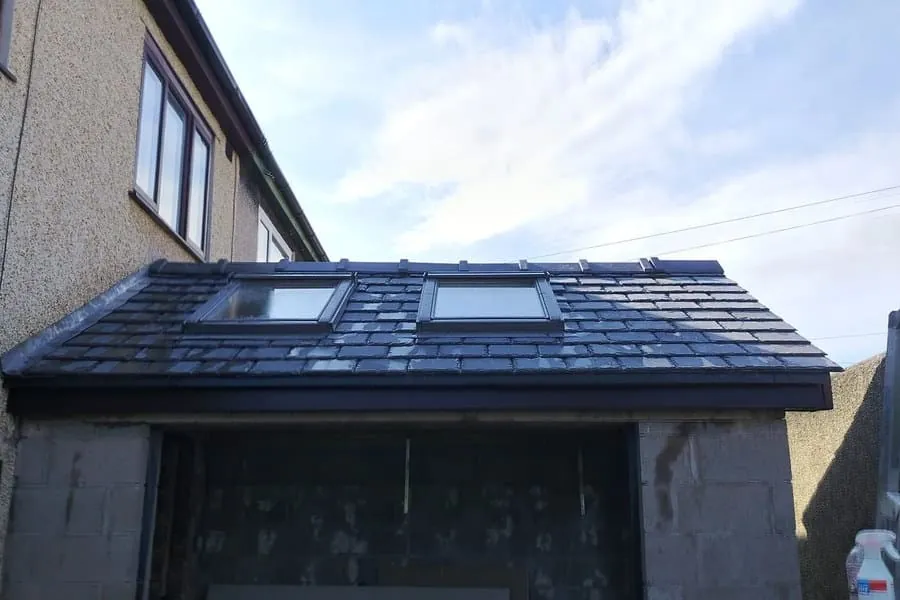
Nobody rings a roofer to find out what a new roof costs. They ring having already been given a number by somebody, and what they actually want to know is whether that number is sane. So here are the figures we work to around Southport in 2026, sorted by the sort of house you are standing in rather than by the square metre, on the grounds that almost nobody knows their roof area and everybody knows whether they live in a terrace, a semi or a bungalow.
Three numbers frame all of it. A full re-roof here starts near £6,000 on a modest terrace in concrete tile and passes £18,000 in natural slate on the larger villas out towards Birkdale Park. Getting up there is routinely a fifth of the total, and Sefton’s own licence fee for a scaffold standing on the footway starts at £171 a week before a single pole is delivered. And the covering itself, the part everybody focuses on, is only about a third of what you are buying.
What a re-roof costs on the houses Southport actually has
Take the brackets below as covering the whole job: scaffold up and down, old covering off and taken away, new membrane and battens, new covering, ridge, verge and flashings, and VAT where it applies. They assume nothing structural has gone wrong and no solar array has to come off first. Anything outside that gets its own line, which is the point of having somebody look before quoting.
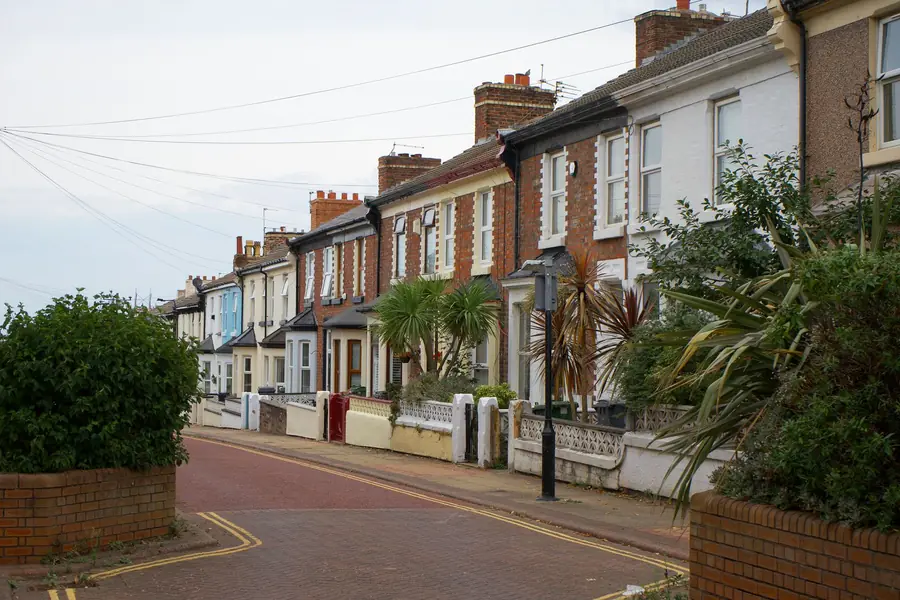
The Victorian and Edwardian two-storey terraces - the streets running back off Lord Street, and the rows behind the Promenade and along toward Hesketh Park - carry roughly 55 to 75 square metres across the front and rear pitches. Concrete tile puts those at £6,000 to £9,000. Fibre cement slate sits at £7,500 to £11,000. Natural slate is £9,000 to £14,000, and on a street where every other roof is slate that is very often the only sensible answer, for reasons covered on our page about full roof replacement in Southport.
The bay-fronted semis through Birkdale, Hillside, Ainsdale and Churchtown are a bigger job than they look. Call it 80 to 100 square metres, but with a hip or two, a bay roof, more verge and usually a second stack. Concrete tile lands at £7,500 to £12,000, natural slate at £11,000 to £18,000.
The 1960s and 1970s detached bungalows are the interesting case, because they invert the usual maths. A bungalow is 110 to 140 square metres of covering, more than any terrace, and yet every inch of it is reachable from a single storey. Access stops being the dominant cost, so a full re-cover in interlocking concrete tile comes in at £6,500 to £11,000 - and the low pitch brings its own questions, which is why we wrote separately about how those original concrete tiles are ageing on Southport’s bungalows. A dormer bungalow is a different animal again: the cheeks, the flat tops and the extra leadwork push it to £9,000 to £15,000.
At the top, the large hipped villas around Birkdale Park, Lord Street’s side roads and the seafront guest houses start at £18,000 and keep going, because the area is bigger, the valleys and hips multiply the labour, and the scaffold is a three-storey structure rather than a two-storey one.
Small roofs are worth pricing on their own rather than guessing at a proportion. A bay roof recovered in EPDM or fibreglass is £600 to £1,200, lead from £1,200 upwards, and a single dormer done in isolation £900 to £2,000. We have gone through those in detail in the piece on bay, porch and dormer roofs.
The covering, and how much of the spread it really explains
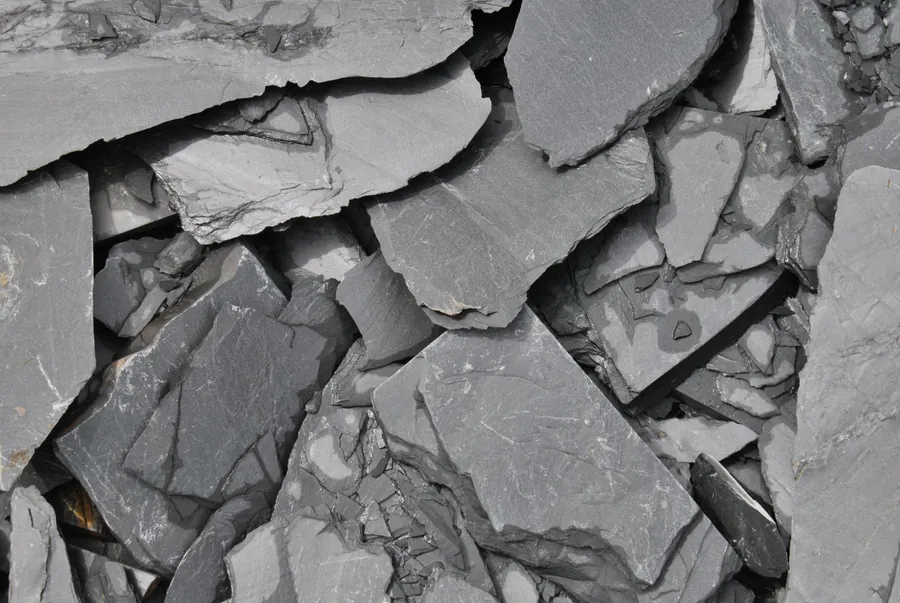
Supplied prices, per square metre, before anybody lays anything. Concrete interlocking tile runs £18 to £30. Fibre cement slate £30 to £45. A decent Spanish natural slate £45 to £70. Welsh slate £100 to £160. That is the two-to-three-times gap between Welsh and Spanish in hard numbers. Plain clay tiles sit near the slate end and weigh a good deal more, which matters on old rafters.
Now put that on a roof. Seventy square metres of fibre cement is about £2,600 of material. The same area in Spanish slate is about £3,900, and in Welsh slate nearer £9,000. Those gaps are real, and they are also the only part of the quote that moves. Scaffold, stripping, disposal, membrane, battens, leadwork and the labour to hang it are identical whichever box arrives on the pallet. So the step up from tile to a good Spanish slate is about £1,300 on that roof, which is less than most people brace for. The step up to Welsh is £6,400, which is more. Which material suits which Southport roof is a longer conversation, and we have had it in full in which slate to put back on a Southport re-roof.
Weight is the constraint nobody mentions until it bites. Natural slate is around 30 to 40 kilos a square metre and concrete tile more again, so a roof built for slate can usually take slate back and a roof built for lightweight tile cannot necessarily take anything heavier. If the covering is going up in weight, somebody has to have looked at the timbers, and that belongs in the price rather than in a conversation halfway through.
Where the money actually goes
Here is a real shape for a job, so you can see which lines are big. Seventy square metres of two-storey mid-terrace, stripped and re-slated in Spanish natural slate, excluding VAT.
Scaffold to front and rear comes in around £1,200. Stripping the old covering and taking it away is £12 to £20 a square metre, so call it £1,050. Breathable membrane and new treated battens are another £12 to £18 a square metre, another £1,050. The slate supplied is £3,850. The labour to hole it, hang it and dress it in is £2,000. Dry-fixed ridge and verge systems run £25 to £45 a linear metre, so around £770 across twenty-two metres. New code 4 lead to the stack and the abutments is about £600.
That totals £10,520, and £12,624 once VAT goes on - the upper half of the slate bracket for a terrace, which is where a properly specified job usually sits.
Two lines get added often enough to plan for. Gutters are the first: replacing uPVC guttering on a semi or mid-terrace is £600 to £1,800, and fascias, soffits and guttering together £1,200 to £2,500. Doing that while the scaffold is already standing rather than hiring it again in three years is the single easiest saving available on a re-roof. The second is whatever the strip reveals. Perished battens are expected and priced. A rotten valley board, a soft wall plate or a purlin end that has been wet for twenty years is not. The honest way to handle that is a written allowance and a rate, agreed before anybody starts, so the number is already known if it turns up.
Scaffolding and access, the line that separates two quotes
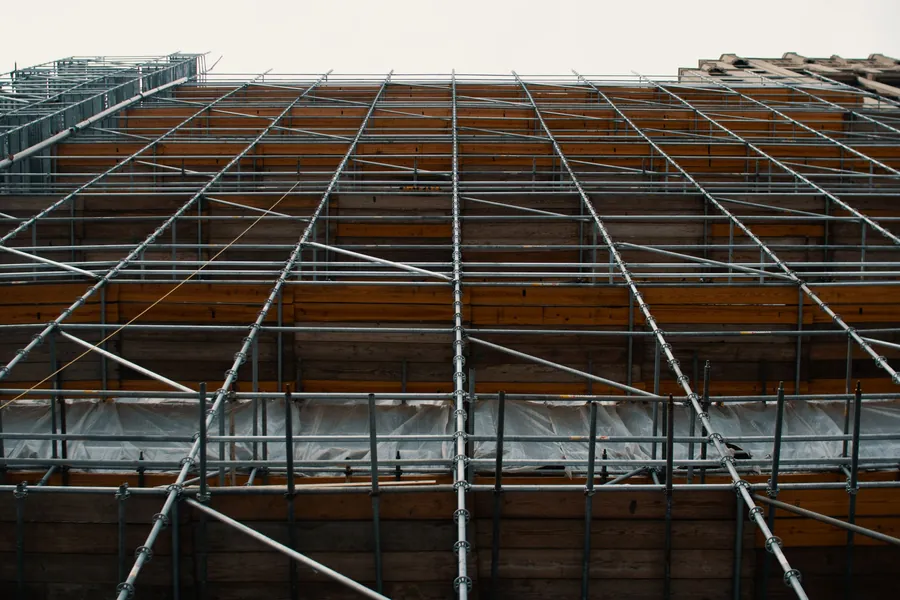
Two roofers can price the same roof identically and still be £1,000 apart, and it is nearly always this. A standard two-storey terrace or semi, front and rear, is £900 to £1,800. A bungalow may need nothing more than a tower and edge protection at £400 to £900. A three-storey villa with hips, valleys and a chimney to reach is £2,500 to £4,000 and can pass that where the ground falls away or the structure has to be tied.
Then there is the town itself. Sefton charges for any scaffold standing on the highway, and the published fees are per week and scale with length: £171 up to 10 metres, £208 up to 20 metres, £240 up to 30 metres. On the terraced streets off Lord Street and around the town centre there is frequently no side access and no front garden to stand a scaffold in, so the footway is the only option and the licence is not avoidable. On a job running four weeks that is several hundred pounds of pure access cost, and it should be visible on the quote rather than absorbed. The rest of the access picture - rear entries, neighbours’ gardens, wind loading on an exposed coastal scaffold - is set out in our piece on scaffolding and access licences for Southport roof work.
So when three quotes land on the table, find the access line before anything else. If one of them has not got one, you are not looking at three prices for the same job.
The coastal lines an inland quote never carries
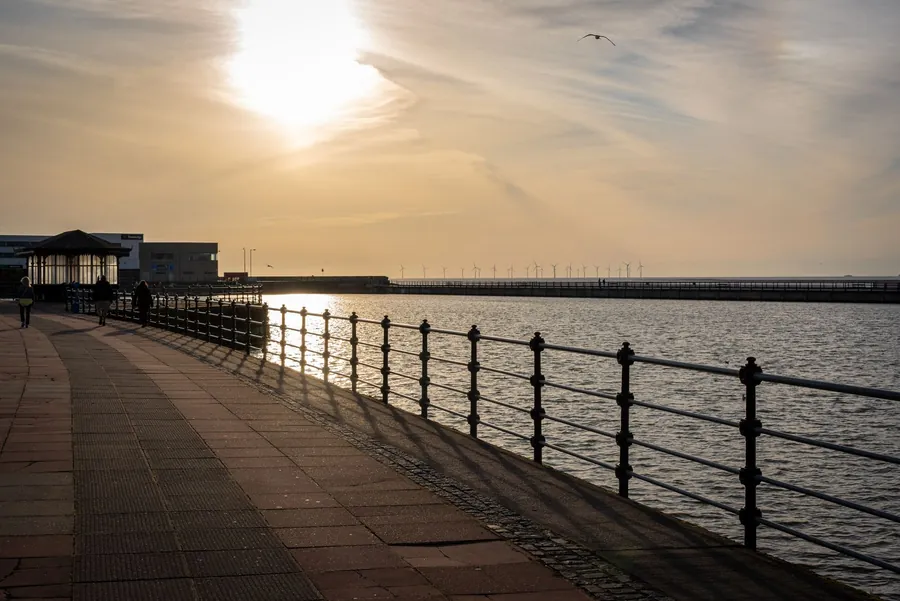
Four items appear on a Southport re-roof that a quote for the same house twenty miles inland would not have.
Fixings are the cheapest insurance on the whole job and the first thing to check. Salt-laden air off the Irish Sea works on standard galvanised nails and hooks far faster than it does inland, and a fine slate held with the wrong nail ends up on the lawn long before the slate itself is finished. Austenitic stainless nails or copper slate hooks add only a few pounds a square metre. Leaving them out saves almost nothing and costs the roof decades.
Then the sand. The dune system from Birkdale through Ainsdale and Formby loads gutters with fine sand every windy spell, which is why so many Southport gutters are heavy and slow rather than blocked by leaves. It is also the strongest argument for doing the rainwater goods while the scaffold is up.
Gull-proofing is the third, and it is the one people only think of afterwards. Herring gulls nest on ridges, in box gutters and behind stacks across the town, and mesh to box gutters or discreet ridge and hip deterrents fitted during the re-roof costs a fraction of retro-fitting them off a tower later. Budget a couple of hundred pounds and have it named on the quote.
The last one surprises almost everybody. Stripping a genuine Victorian slate roof here is a slower and dirtier job than stripping a tiled one, because there is usually nothing underneath the slates at all. No felt means the old mortar torching comes down into the loft as you go, disposal volumes go up and dust sheeting becomes a real task rather than a gesture. We have written about what no felt under the slates means for a Southport roof, and it belongs in the labour figure rather than being discovered on day one.
What a suspiciously cheap re-roof quote has taken out
When one figure lands £3,000 under the others, the question is not whether you have been lucky. It is which line has gone. Around here it is almost always one of seven.
Access priced as ladder work on a roof that needs scaffold. Lead replaced by a cement fillet or a strip of self-adhesive flashband, which looks identical from the pavement and lasts a fifth as long. Battens left off the specification entirely, so the new covering goes back on the old ones. Nothing allowed for what the strip finds. Old slates re-used with no proportion stated, when the honest approach is to price new material and treat sound originals as a credit. Disposal missing, so a skip arrives as an extra. And the covering described as “natural slate” with no origin or grade named, which can mean anything from a seventy-five-year product to a soft, pyrite-flecked rock that streaks brown within a decade.
The eighth possibility is that VAT has simply been left off, and a £9,000 quote is really £10,800.
None of these are savings. They are deferrals with interest. The way to flush them out costs nothing: ask for every quote in writing with the access, the strip and disposal, the battens and membrane, the named covering, the ridge and verge method, and the leadwork on separate lines. A firm doing the work properly will hand that over without hesitating. It is also worth checking a contractor against the National Federation of Roofing Contractors’ member search and, for anyone offering an insurance-backed guarantee, against the TrustMark register of government-endorsed tradespeople.
Staged and partial re-roofs, and when they are worth it
Splitting the job is a legitimate option and we price it regularly. Just go in knowing the arithmetic.
One pitch of a mid-terrace in concrete tile is roughly £3,500 to £5,500. Two of those is more than the £6,000 to £9,000 you would pay for the whole roof in one go, and the reason is the scaffold: it goes up twice, at £900 to £1,800 each time, and the labour loses the efficiency of a single continuous strip. Staging is not a discount, then. It is a way of spreading a cost you cannot meet in one go, which is a perfectly good reason to do it.
Where a partial re-roof genuinely is the right answer is when only one slope has actually failed. On this coast the west and south-west faces take the driven rain and the salt, and it is normal to find one pitch at the end of its life while the sheltered slope has fifteen years left. Re-covering the failed side and leaving the other is a sound decision, not a compromise, and the repair or replace question turns on exactly that kind of evidence.
A strip and relay is the other middle route. Where the slate is sound and only the nails and battens have gone - the classic Victorian failure here - the originals come off, get re-holed and go back on new battens over a new membrane. The covering line falls away and nothing else does, so expect it to land somewhere between a fifth and a third under a full re-slate in new material. Nobody can tell you the reuse rate until the roof is off, so a sensible quote prices new slate and credits back what survives.
One thing to settle before you stage anything. The insulation upgrade is triggered once more than half the surface of the thermal element has been renovated, and a single pitch of a two-sided roof sits almost exactly on that line. Whether the element is read as the whole roof or as the individual slope is the sort of question building control will answer in one phone call, and it is much better asked before the scaffold arrives than after.
VAT, building control and what arrives after the headline number

VAT is the commonest reason two quotes look different and are not. Work on an existing home is standard-rated at 20 per cent. The 5 per cent reduced rate is real but narrow, and the situations that qualify are set out in HMRC’s VAT Notice 708 on buildings and construction: mainly a home empty for two years or more before the work starts, or work forming part of a conversion that changes the number of dwellings. Re-slating an occupied terrace is not on that list. Ask for VAT as its own line and the comparison problem disappears.
Building control is the other item that arrives late if nobody mentions it. A roof is a thermal element, and stripping one back to the rafters and rebuilding it is a renovation of that element, which makes a re-roof notifiable building work. So the job goes through Sefton Council’s building control service or a private approved inspector. Then there is the insulation. Approved Document L, volume 1 asks that where more than 50 per cent of the surface of a thermal element is renovated, the whole element is brought up to an improved U-value - 0.16 W/(m²·K) for a roof. A full re-roof is 100 per cent of it, so that applies, and the loft insulation gets topped up as part of the work. There is a get-out where hitting 0.16 is not technically or functionally feasible or would not pay back within fifteen years, in which case you go as far as is feasible instead. Either way the fee is modest against the job and should be on the quote, not absorbed.
Then the small change: a skip permit or a parking bay suspension where there is nowhere off-road, and making good inside. Stripping a roof with no felt over it brings dust and the odd hairline crack in a ceiling, and a quote that says who is decorating afterwards has saved an argument.
If you want a real figure for your own roof rather than a bracket, somebody will come out, get up there, and put it in writing with the access, the covering and the VAT on separate lines. Book a free roof survey in Southport and you will get a number you can actually compare.
Frequently Asked Questions
How much does a new roof cost in Southport in 2026?
For a two-storey mid-terrace of roughly 55 to 75 square metres, £6,000 to £9,000 in concrete tile and £9,000 to £14,000 in natural slate. A bay-fronted semi with a hip or two runs £7,500 to £12,000 in tile and £11,000 to £18,000 in slate. A single-storey bungalow has more covering but far cheaper access, so it lands at £6,500 to £11,000 in interlocking tile. The big villas towards Birkdale Park and the Promenade start at £18,000. Those brackets assume scaffold, strip and disposal are all inside the figure, that no structural work is needed, and that VAT is included where it applies.
How much more does natural slate cost than concrete tile on the same roof?
As a material, roughly two to three times as much. Concrete interlocking tile is around £18 to £30 a square metre supplied, fibre cement slate £30 to £45, a good Spanish natural slate £45 to £70, and Welsh slate £100 to £160. On a 70 square metre terrace roof that is about a £2,000 gap between tile and Spanish slate and closer to £7,000 between tile and Welsh. The final quote never widens by more than the material gap, though, because scaffold, stripping, membrane, battens, leadwork and labour cost the same whatever goes on top.
Is there any way to avoid the VAT on a re-roof?
Usually not. Repairs and re-coverings to an existing home are standard-rated at 20 per cent, and that is why a quote showing £9,000 can turn into £10,800 on the invoice. The reduced 5 per cent rate does exist but the qualifying situations are narrow: a home that has stood empty for two years or more before the work starts, or work forming part of a conversion that changes the number of dwellings in the building. Neither applies to an occupied house having its slates renewed. Ask for VAT on its own line so you can see which figure you are comparing.
Do I need building regulations approval to re-cover my roof?
Yes. A roof is a thermal element, and a re-roof strips it back to the rafters and rebuilds it, which is a renovation of a thermal element and therefore notifiable building work. It goes through Sefton Council building control or a private approved inspector. Where more than 50 per cent of the surface of that element is renovated, and a full re-roof always is, Approved Document L asks for the whole roof to reach an improved U-value of 0.16 W/(m²·K), so the loft insulation usually gets upgraded as part of the job. There is a relief where that is not technically or functionally feasible, or would not pay for itself within fifteen years. Get the application fee listed on the quote rather than discovering it later.
Can I have the front pitch done now and the back next year?
Yes, and on a mid-terrace a single pitch in concrete tile is roughly £3,500 to £5,500. Be clear about what splitting it costs you, though. The scaffold goes up twice, at £900 to £1,800 a time, so two halves come to appreciably more than one whole. Where it genuinely pays is when only one slope has failed, which on this coast is common - the west and south-west faces take the weather and go first, and the sheltered slope can have years left in it.
Free Roof Survey & Quote
Free roof survey and a fixed written quote, anywhere across Southport, Sefton and West Lancashire.