
6 August 2026
Does Your Southport Roof Need Replacing, Or Just Mending?
Forget how old it is. The question that actually decides it is whether failures keep landing in the same place or somewhere new - and you can work that out from your own garden.
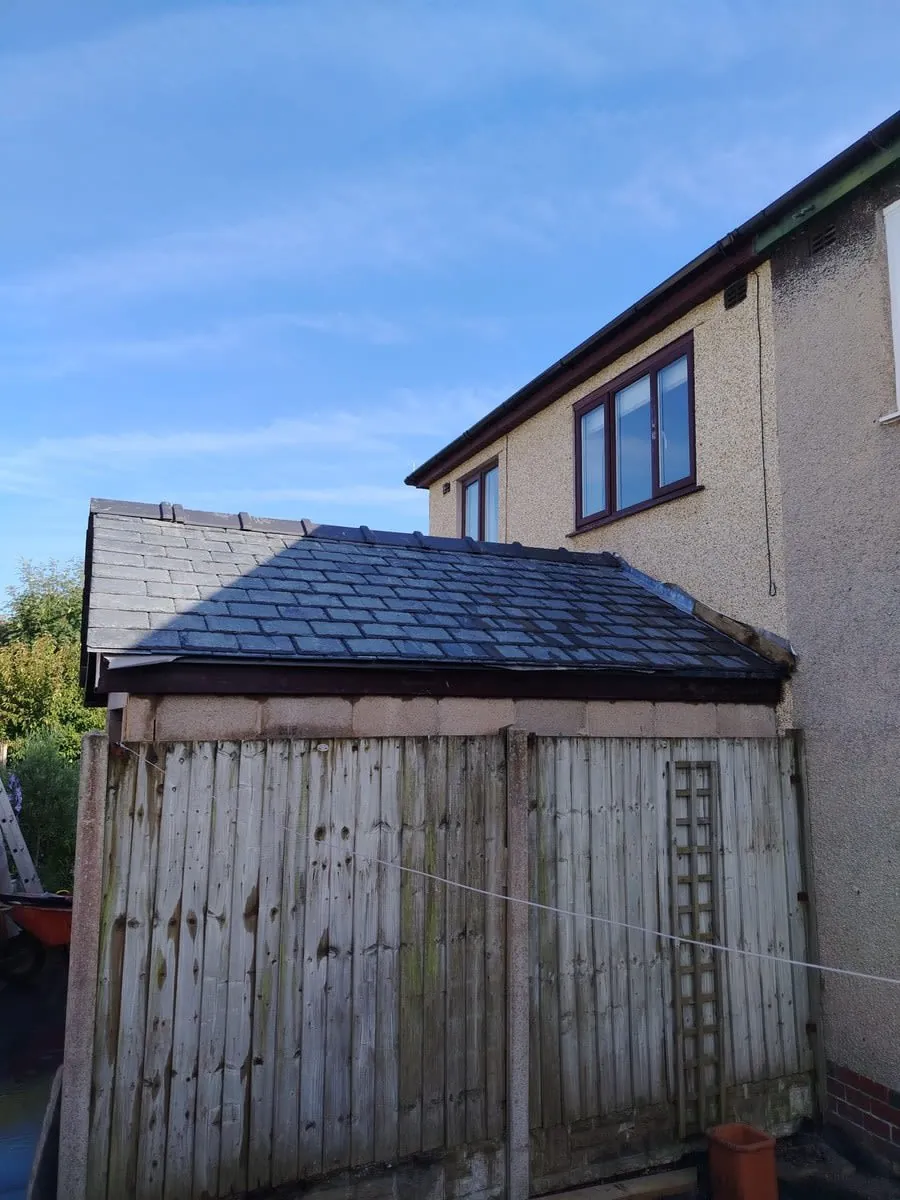
Nearly every call opens with a version of the same question. It’s a sixty-year-old roof, is it done? One slate came off in January - is that the start of something? A bloke told me it all needs replacing, is he having me on?
The frustrating answer is that the age of your roof settles almost nothing. There are Victorian slate roofs in Birkdale that will comfortably outlast everyone reading this, and there are tile roofs from the 1980s that have been condemned. What settles it is a pattern - and the good news is that you can spot the pattern yourself, without a ladder, from your own garden with a cup of tea.
Design life is a planning tool, not a diagnosis
Roof coverings do have expected lifespans and they get quoted endlessly. Welsh and Westmorland slate: eighty to a hundred years plus. Clay tile: sixty to eighty. Concrete interlocking tile: thirty to fifty. Modern torch-on felt on something flat: fifteen to twenty.
Useful for budgeting. Close to useless for working out what is happening to your house, because those figures describe the covering, and the covering is hardly ever the first thing to fail.
What fails first is everything holding the covering on, and everything joining it to something else. Nails. Mortar. Lead. Battens. The timber underneath all of it.
Which is precisely how a hundred-year-old slate roof ends up in better shape than a forty-year-old tiled one. Slate is a piece of rock; it does not really wear out. Ironmongery does.
Nail fatigue, and why Southport gets it early
If one idea from this page is worth keeping, make it this one. Roofers call it nail sickness or nail fatigue, and it is the single most dependable signal that a slate roof has run out of road.
The mechanism is almost tediously simple. When the roof went on, every slate was nailed to a batten - and all of those nails went in during the same week, from the same batch, into the same conditions. They then spend decades quietly corroding. Having started together, they finish together.
Which is why a single slate coming off tells you almost nothing. Slates come off for all manner of innocent reasons: one unlucky gust, a branch, a single nail that was always slightly proud. The tell is where they keep coming off, tracked over a few years.
One off the front in 2023. One off the back in 2024. Two more in the border this spring, from somewhere else entirely. That is not three separate misfortunes. That is several hundred nails you cannot see arriving at the same destination at the same time, and no individual repair alters that in the slightest.
Compare that with a leak that shows up in precisely the same spot whenever rain comes in hard off the sea, and has done for two winters running. That is one failed detail - a flashing, a valley, a soaker - and it is a repair, whatever the deeds say about the age of the house.
Here is the part specific to this town. Salt-laden air is relentlessly hard on iron and steel. A roof within a mile or two of the water gets to nail fatigue meaningfully sooner than the identical roof would inland, which is why a Birkdale or Ainsdale roof can start shedding slates at an age that would look premature over at Ormskirk or Burscough. The slate is fine. The nails have simply had a harder war.
What you can see without leaving the ground
Do not get on the roof. A decent pair of binoculars from the garden, or from the pavement opposite, will tell you most of what matters.
Where the gaps are. Missing or slipped slates are obvious enough - it is their distribution that carries the information. Clustered in one area suggests something local. Scattered across two or three elevations suggests something systemic.
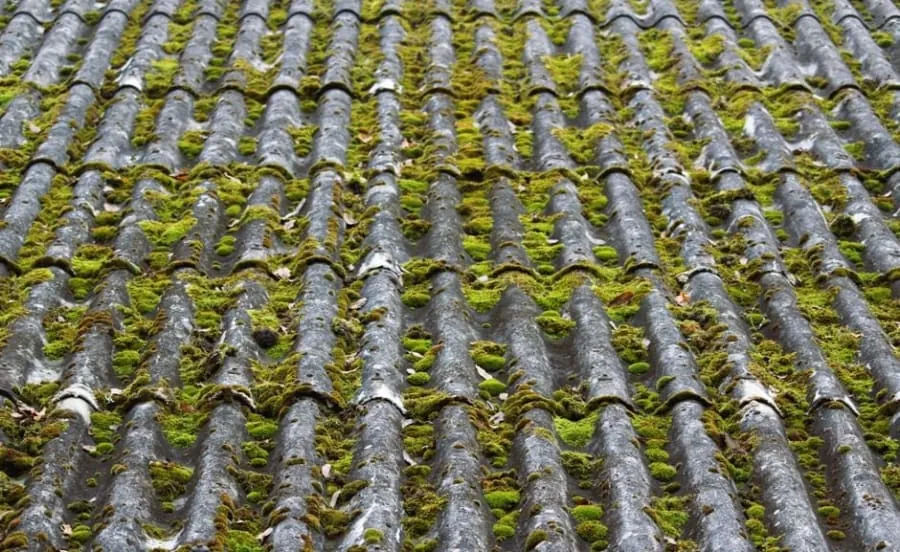
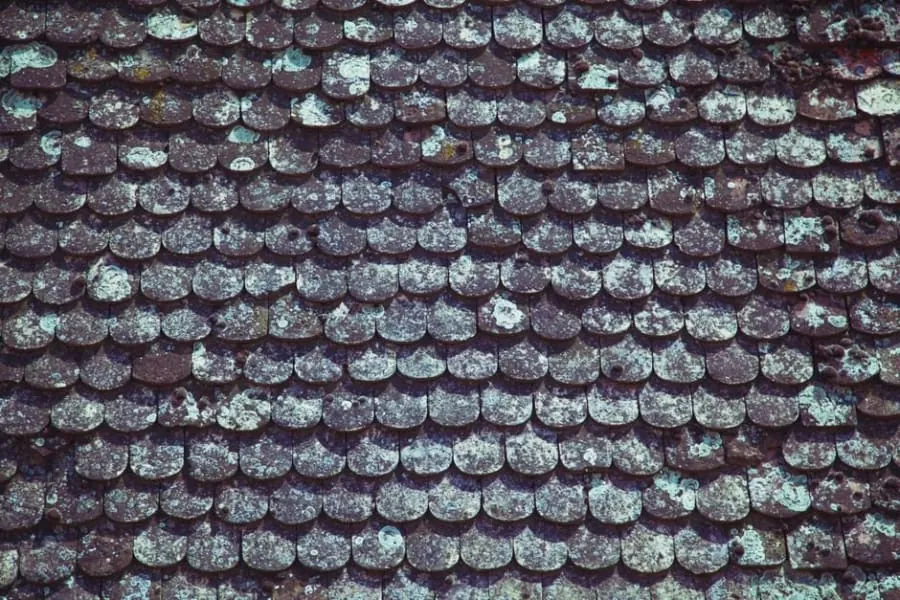
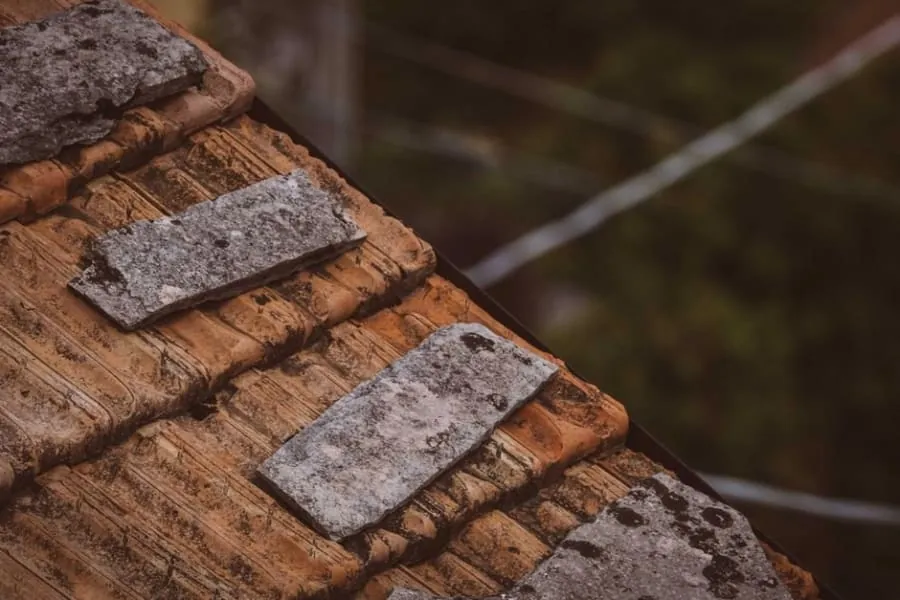
Slates that look tired. Delaminating slate flakes at its edges and starts to look layered, rather like a paperback left out in the rain. Concrete tiles fade, lose their surface texture, and once that surface has gone they take moss readily.
The line of the ridge. Sight along it. It should be straight. A dip in the middle points at the structure rather than the covering, and that is a bigger and more serious conversation.
Grit on the drive. Fragments of mortar turning up in the gutter or on the path below mean the bedding on your ridge, or your chimney flaunching, is breaking up.
Things growing. Moss on a north-facing slope is entirely normal here, and under the pines at Formby and Freshfield it is close to universal - largely cosmetic. Actual plants sprouting from a chimney stack or a valley are not, because they prove there is enough trapped silt and standing water up there to sustain a plant.
Sand. Genuinely worth a look if you are anywhere near the dunes. Fine sand collects in valleys and gutters, binds with moss, and forms a mat that holds water where water should be running away.
What the loft will tell you
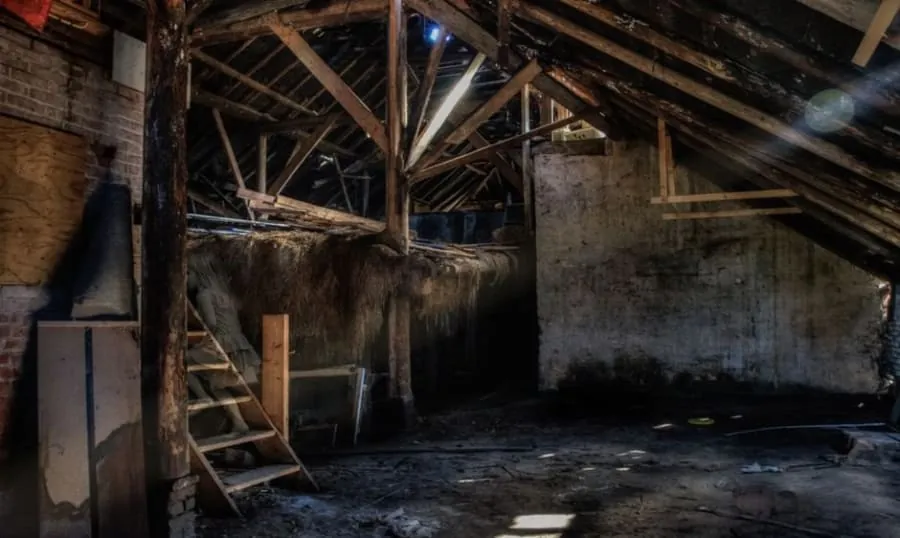
The loft holds the real evidence and it is the bit almost nobody checks. Pick a bright day, take a torch anyway, and mind the joists.
Daylight. A few pinpricks around a vent or where the membrane has been trimmed are normal. Being able to make out the sky through the covering in several separate places is not.
Timber that is wet, or timber that was. Run a hand along the rafters, particularly down at the bottom where they meet the wall. Dark staining that feels bone dry is history - an old leak, since mended or since stopped. Timber that is genuinely damp to the touch is a live problem.
The membrane. Old bitumen felt goes brittle, tears, and holds little pools where it sags between rafters. Modern breathable membrane should be taut and unbroken.
Battens. If a screwdriver goes into a batten, or the timber gives under a thumbnail, then the thing your slates are nailed to has gone soft. That is about as close to definitive as this gets.
Beads of water on nail points. Careful here, because this is very often condensation rather than a leak - and in a low bungalow roof space with poor eaves ventilation it is close to guaranteed. Ventilation fixes that. Roofing work does not.
When mending is plainly the right answer
Most of the roofs surveyed around this town should be mended, not replaced - including a decent number belonging to people who had already been told the opposite by somebody else.
Mending is right where the trouble keeps landing in one place while everything around it sits flat and even; where what has actually failed is a junction rather than the covering; where the loft timbers are dry; and where this is your first problem in several years rather than your third in three.
The financial gap is stark enough to be worth spelling out. One-fault repairs around Southport run £150 to £900. A full re-roof starts somewhere near £6,000 for a modest terrace in concrete tile and climbs past £18,000 in natural slate on something larger - and the big villas out towards Birkdale Park go beyond that again, because there is simply more roof, the shape is more complicated and the scaffold is a three-storey job.
Being talked into the second when you needed the first is among the more expensive mistakes available to a homeowner. It happens because a re-roof is a far better week’s work for the roofer than a length of lead is.
Reading a re-roof quote intelligently
Where replacement genuinely is the answer, knowing what a proper job looks like lets you compare quotes on something other than the total.
The word you want is “strip”. Battening new tiles over the existing covering is quicker and cheaper, and it is very rarely the right thing to do to a house. It hides whatever state the timbers are in and loads a structure designed for one covering with the weight of two. Get it written down.
New membrane and new battens throughout. Breathable underlay vents moisture out of the roof space while keeping weather on the outside. The old bitumen felt manages neither especially well and is behind a great many loft condensation complaints.
Fixings, specified. This is the line that matters most on this coast and the one most easily and quietly downgraded. Standard fixings a mile from the Irish Sea will not deliver the lifespan the covering is capable of. Ask what is being used and ask about corrosion resistance by name.
Lead, itemised. Chimneys, valleys, abutments, soakers. Lead is expensive, which makes it the first casualty of a keen price. A re-roof quote that never mentions lead anywhere needs a conversation about every junction on the roof - and a villa with hips, valleys and bay roofs has a great many junctions.
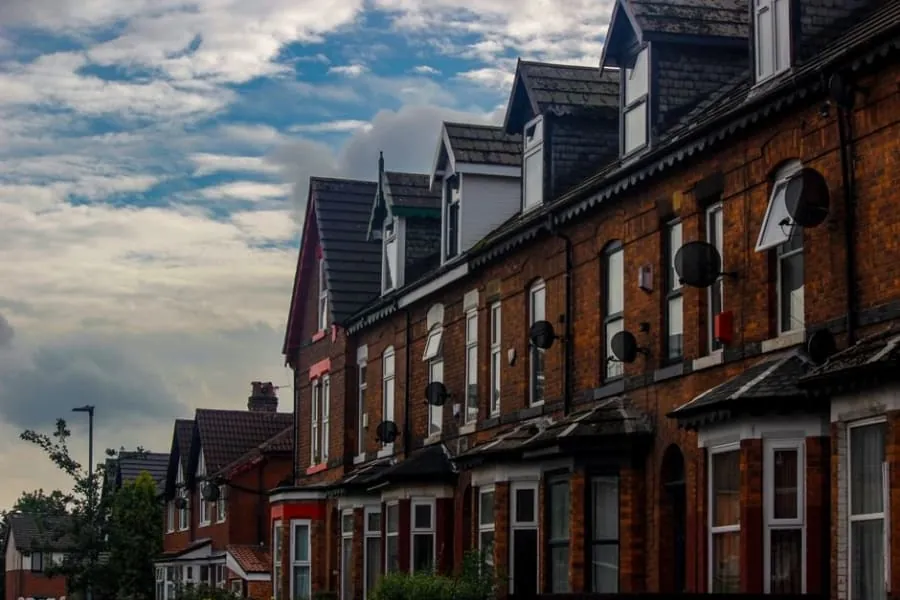
A covering that matches the street. Southport’s Victorian and Edwardian roads read as one continuous roofline. Concrete tile dropped into a slate terrace looks wrong permanently, and inside a conservation area it may not be permitted at all. The Planning Portal’s guidance on roofs sets out where permitted development stops, and Sefton Council is who you ask for Southport, Birkdale, Ainsdale, Churchtown, Formby, Crosby and Maghull. Do check which authority you are actually in, because it trips people constantly: Ormskirk, Burscough and Banks are West Lancashire Borough Council, a different council in a different county, and Banks is a mere three miles up the road from Southport town centre.
It is also worth checking whoever you use belongs to a recognised trade body such as the National Federation of Roofing Contractors.
So, which have you got?
Strip everything above down to one question and it is this: is the trouble arriving in the same place, or somewhere new?
Same place, same weather, year after year - that is a detail, and details cost a few hundred pounds to put right regardless of how old the roof is.
Somewhere different every winter - that is the fixings, and from that point on repairs are money you will never see again.
If you genuinely cannot tell which you are looking at, that is exactly what a free survey is for, and a fair proportion of them end with somebody saying it can wait another few years. You can read what replacing a roof actually involves if you suspect you are in the second camp, or simply ring and describe what yours has been doing.
Frequently Asked Questions
At what age does a roof need replacing?
There is no such age. Natural slate laid in the 1890s can still be doing its job perfectly, while a poorly laid concrete tile roof from the 1980s can be finished. What decides it is the pattern of failure across the roof, not the date the house was built.
Is repairing a roof cheaper than replacing it?
Overwhelmingly, until the point at which it is not. A single repair at £150 to £900 sits against £6,000 to £18,000 for a re-roof, so where one detail has failed, repairing is obviously right. The maths inverts once you are paying for a fresh repair every year in a different spot, because that means the whole roof is arriving at the end together.
What is nail fatigue?
It is the corrosion of the nails holding slates to the battens. Every nail on a roof went in on the same day, so they reach the end of their lives at roughly the same time and slates begin slipping from different parts of the roof within a few years of one another. It is the clearest single indicator that a slate roof wants replacing rather than patching.
Does sea air make a Southport roof wear out faster?
It shortens the life of the fixings, which amounts to the same thing. Salt barely affects slate or tile, but it corrodes iron and steel continuously, so nails, brackets and exposed metalwork last less time here than a few miles inland. A roof in Birkdale or Ainsdale can therefore reach nail fatigue noticeably earlier than an identical roof at Ormskirk.
Do I need planning permission to replace a roof in Southport?
A straight like-for-like swap is permitted development, so no. Permission becomes relevant if you change the covering material or the roof shape, or if the building is listed or sits within a conservation area. Sefton has 25 conservation areas including Lord Street, the Promenade, West Birkdale and North Meols. Sefton Council is the authority for Southport, while Ormskirk, Burscough and Banks fall under West Lancashire Borough Council.
Free Roof Survey & Quote
Free roof survey and a fixed written quote, anywhere across Southport, Sefton and West Lancashire.