
8 September 2026
Welsh, Spanish Or Fibre Cement? Choosing The Slate For A Southport Re-Roof
Most Southport roofs are slate, so a re-roof means deciding which slate goes back on. Quarry origin, the three codes on the box, weight, price and what the conservation area will let you use.
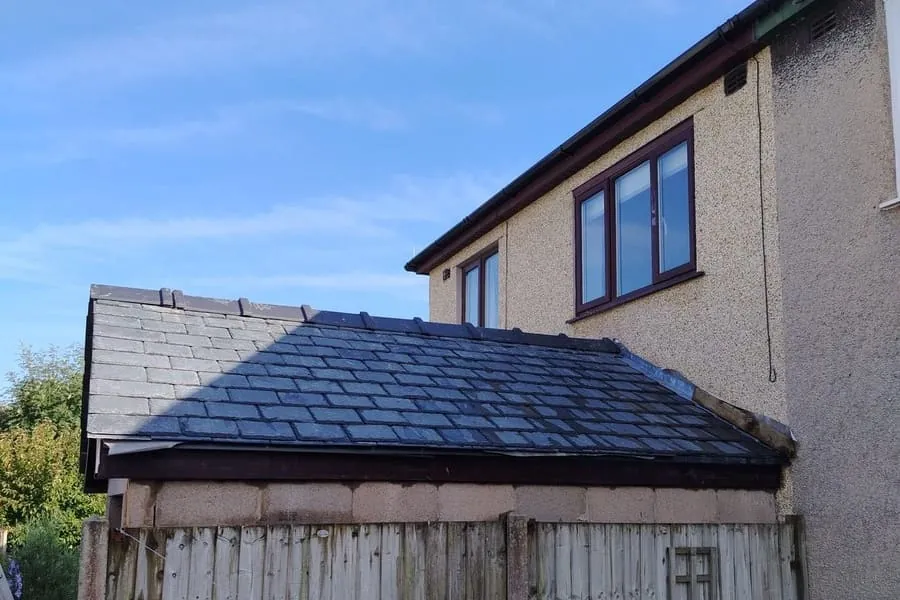
Somewhere between a third and a half of any Southport re-roof quote is the covering itself, and on most of the town’s housing that covering is slate. Which slate goes back on is the biggest single decision in the job, and it is the one most homeowners leave to whoever is quoting.
That is a mistake. The choice sets how long the new roof lasts, what it weighs, whether it matches the street, and in a handful of postcodes whether the council will let you lay it at all. This is a plain guide to the options as they apply to a house on the Sefton coast.
Southport is a slate town, and that sets the terms
The town grew up in a hurry between about 1850 and 1910, and the builders who put up the villas around Hesketh Park, the terraces behind the Promenade and the Birkdale Park estate roofed nearly all of it in Welsh slate carried in by rail from the quarries of Gwynedd. That is why the rooflines of Southport read as one continuous blue-grey plane when you look down a street, and why anything different dropped into the middle of it shows from a hundred yards.
A re-roof on one of those houses is therefore not a blank sheet. You are choosing a replacement for a material that has already lasted well over a century in exactly this weather. The bungalow belt through Ainsdale and the postwar estates are a separate case with a separate answer, and we come to those further down. But if you own a pre-1920 house and are weighing up a full roof replacement in Southport, the realistic shortlist is three materials: Welsh slate, Spanish slate, and fibre cement.
Welsh slate: the original, and the price of it
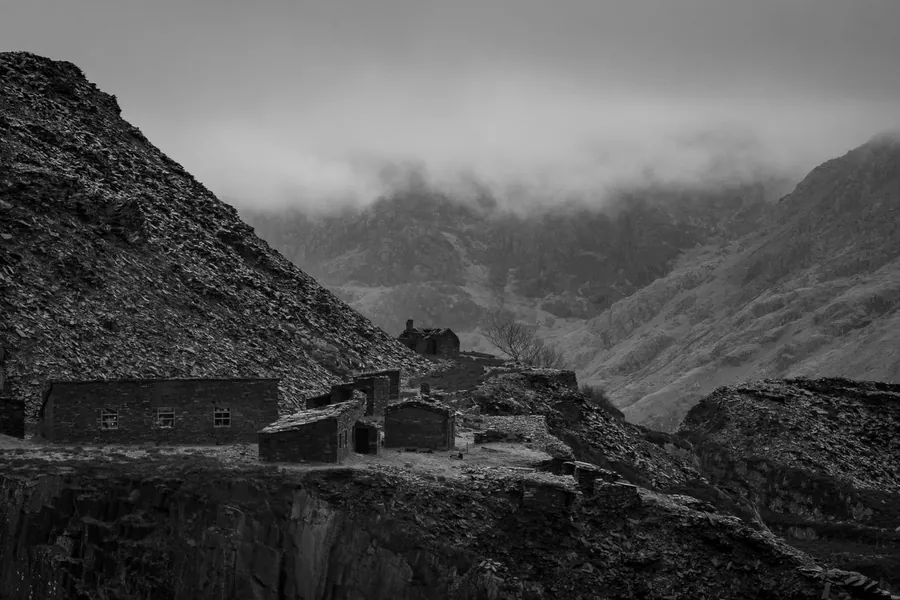
At its peak in the nineteenth century, the quarries of North Wales were cutting around a third of all the roofing slate used anywhere in the world, and the landscape they left behind was added to the UNESCO World Heritage list in July 2021. A few of those quarries are still working. Penrhyn near Bethesda is the big one, and its purple-grey slate is what most people picture when they think of a Welsh roof.
What you are paying for is a dense, fine-grained rock that absorbs almost no water, does not fade, and does not carry the iron pyrite that leaves rust streaks on lesser slates. A hundred years is a conservative life expectancy. The Victorian roofs coming off Southport houses today generally failed at the nails and the battens, not in the slate, which is why a surprising amount of it can be re-holed and laid straight back on.
The price is the difficulty. Welsh slate as a material runs at two to three times the cost of a good Spanish equivalent, and on a big hipped villa with valleys and bays that difference is several thousand pounds before anyone has climbed a ladder. Whether that is money well spent depends on how long you expect to own the house and how much you care about the roof still being the same roof in 2100.
Spanish slate, and the three codes that tell you what you’re buying
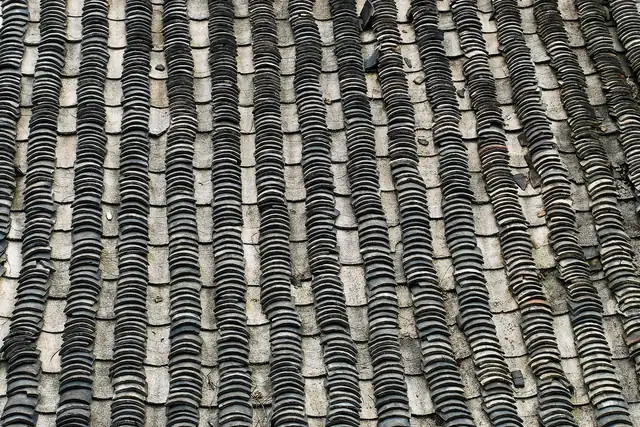
Spain now cuts something like nine-tenths of the natural roofing slate laid in Europe, and it is the material on the majority of new slate roofs going up across Merseyside. That is not a compromise in itself. Good Spanish slate from the Galicia and Castile quarries is an excellent product with a realistic life of seventy-five years and more. The problem is that “Spanish slate” covers everything from that down to a soft, pyrite-flecked rock that will streak brown and start shedding within a decade.
The way to tell them apart is on the paperwork. Every natural slate sold in the UK has to be tested to the European standard BS EN 12326, and the results come as three short codes. W is water absorption, and W1 means the slate took up 0.6% or less of its own weight, which is the grade that resists frost. T is a wetting-and-drying test that shows up rusting from pyrite, and T1 means no meaningful change. S is an acid-exposure test standing in for polluted or salt-laden air, and S1 means the slate came through it unaltered.
For a roof within reach of the Irish Sea, insist on W1, T1 and S1 together, and ask the roofer for the declaration of performance that goes with the batch. A quote that just says “natural slate” with no grade is a quote for whichever pallet was cheapest that week. Ask about thickness too. A thicker, heavier slate lies flatter in wind and is less inclined to lift at the tail on an exposed elevation.
Fibre cement and the man-made slates
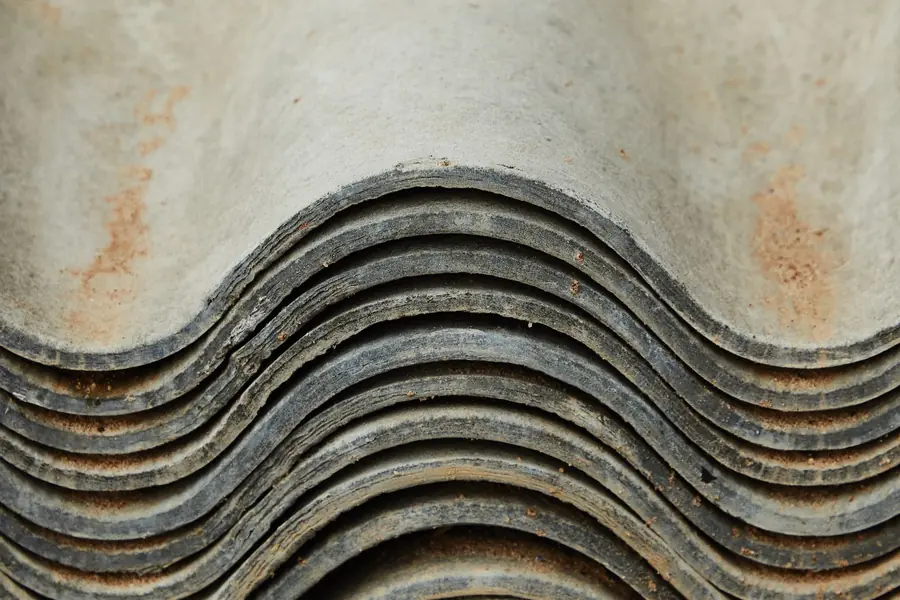
Fibre cement slates are a pressed mix of cement, fibres and fillers, coloured through and coated. They are the lightest covering you can put on a pitched roof at around 20 kilograms a square metre, they come out of the box identical, they cut cleanly and they lay fast. All of which makes them cheap, and the cheapness is the honest reason they get specified.
The trade-offs are what you can see and how long it lasts. The surface is flat and uniform, so a fibre cement roof beside a natural slate one looks like what it is, and the colour tends to lighten unevenly as the coating weathers. Realistic life is three or four decades, and the manufacturer’s guarantee will tell you what they actually expect. On this coast the coating is doing a lot of work against salt and driven sand, and once it goes the body of the slate starts to absorb water and grow moss quickly.
Where they earn their place is on a rear slope nobody sees, a garage or a workshop, or a roof whose timbers were never designed to carry natural slate and cannot be upgraded economically. There is also a family of composite and resin slates aimed at the same market. Same rules. Fine out of sight, a hard sell on a Victorian frontage.
If your roof is tiled, not slated
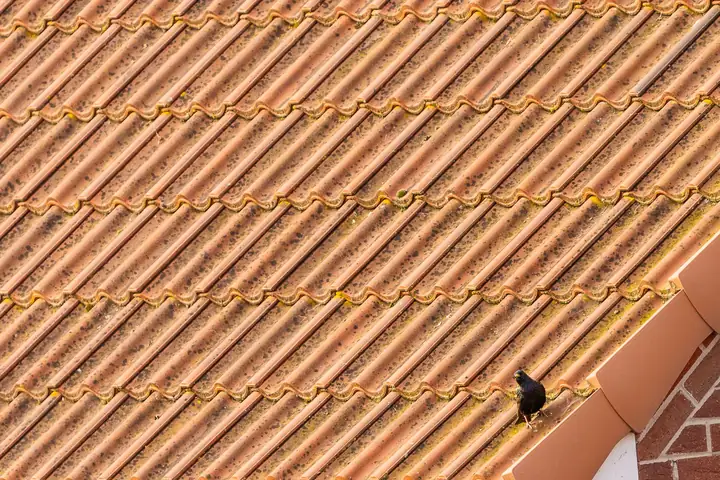
The Ainsdale and Birkdale bungalows, the interwar semis off Liverpool Road and the estates around Kew were never slated, and re-roofing them in slate is usually the wrong answer. Their rafters were sized for tile, their pitches are often too shallow for slate to lay reliably, and the street does not expect it.
The realistic choice there is between a modern concrete interlocking tile and a clay equivalent. Concrete is cheaper, heavier and duller with age, and we have written separately about how those 1960s tiles are ageing on Southport’s bungalows. Clay holds its colour and outlasts concrete by a wide margin, but it costs more and plain clay tiles in particular are very heavy. Whichever you pick, ask two things: the minimum pitch the tile is rated for, because a lot of the bungalow stock sits close to the limit, and how the ridges and hips are being fixed. Since 2015 the British Standard for slating and tiling, BS 5534, has required every ridge and hip tile to be mechanically fixed rather than relying on mortar alone, and on an exposed roof the dry-fixed systems that meet it are the difference between a ridge that stays put in a February gale and one that does not.
Weight: what your rafters were built to carry
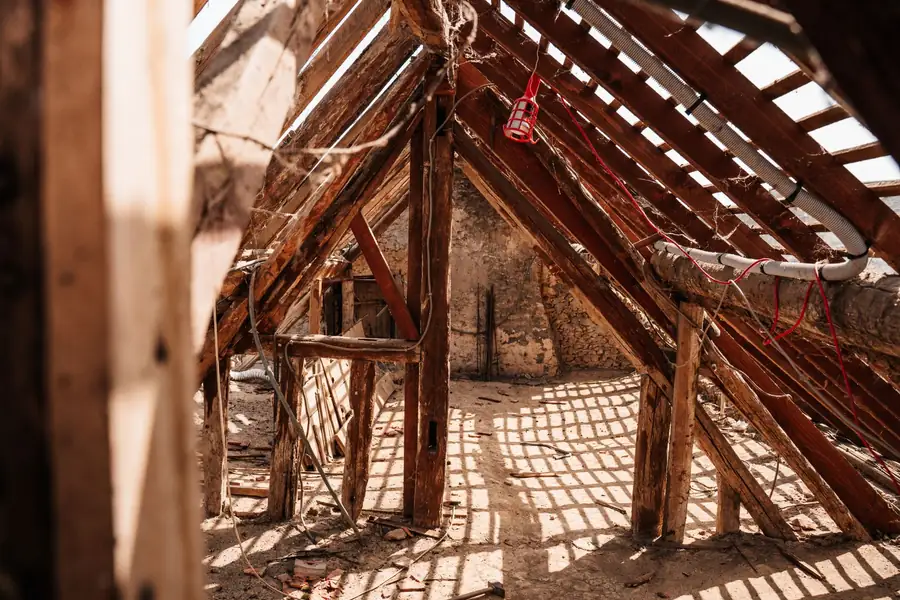
This is the part of the decision that gets skipped, and it matters more than colour. A roof covering is a permanent load on timbers that were sized for whatever went on originally. Natural slate comes in at somewhere around 30 to 40 kilograms a square metre depending on thickness. Concrete interlocking tiles are in the mid-forties. Plain clay tiles can exceed 70. Fibre cement sits near 20.
Going lighter is never a structural problem. Going heavier is. Putting concrete tile onto a Victorian roof framed for slate, which was done to a great many houses across the North West in the 1970s and 80s, adds a third or more to the dead load on rafters that may already be tired, and the sagging ridgelines you can spot along some Southport streets are the result. The reverse also happens: a bungalow re-slated in a heavy natural slate without anyone checking the trusses.
Any decent re-roof quote should say what the existing covering weighs, what the proposed one weighs, and if the second figure is higher, who has checked the roof can take it. If the answer involves strengthening the rafters, that belongs in the price.
Matching the street, and the conservation-area question
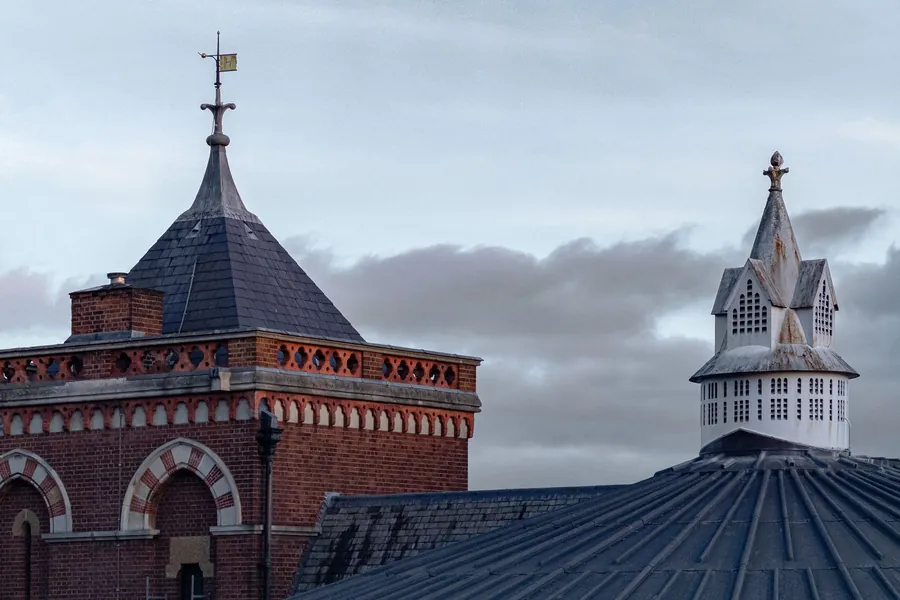
Southport has more conservation areas than most towns its size, and the ones covering the Victorian and Edwardian core are precisely where re-roofing decisions get looked at. Sefton Council publishes the full list, and Lord Street, Promenade, Birkdale Park, West Birkdale and Hesketh Road are the ones that catch the most roofs.
The practical rule inside them is like for like. Natural slate replaced with natural slate is not a planning matter at all. Natural slate replaced with fibre cement, or with a tile, on an elevation visible from the road, is a change of material and appearance, and the council’s duty to protect the character of the area means it can and does object. We have set out the detail of which roofs need consent in our guide to planning permission for roof work in Southport. The short version is that a fifteen-minute call to the conservation team before you sign anything costs nothing and has stopped a lot of expensive arguments.
Outside the conservation areas there is no rule, but there is the street. A house re-roofed in something that does not match its neighbours is permanently, visibly different, and a good proportion of buyers and surveyors notice.
What the choice does to the price, and how to read the quote
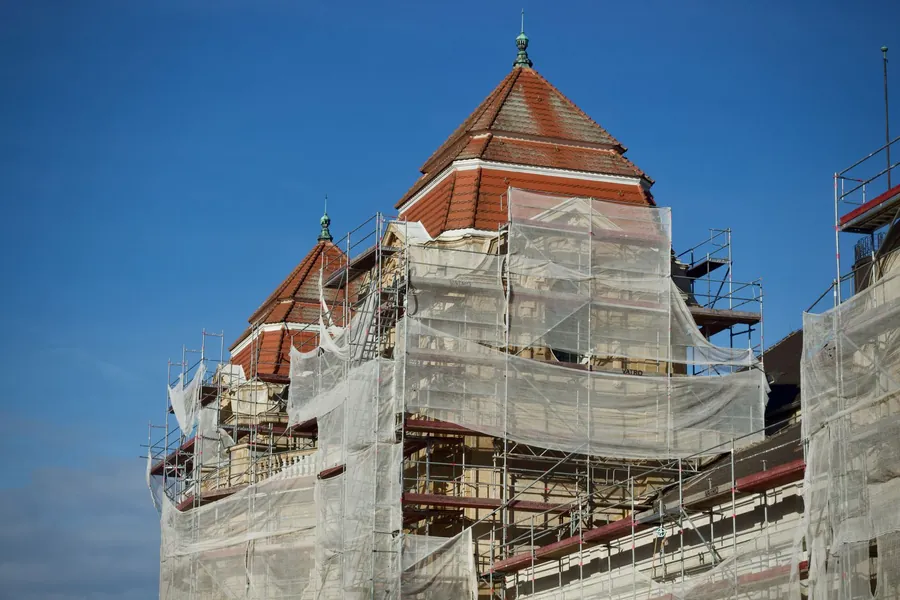
Scaffold, stripping, new breathable membrane, new battens, leadwork and labour cost the same whatever goes on top. The covering is the variable. On a typical Southport semi, fibre cement is the floor, a good Spanish slate sits comfortably above it, and Welsh slate is the ceiling, with the gap between floor and ceiling running to several thousand pounds on a large roof. Our roof repair and replacement cost guide gives the bands we work to for the town’s main house types.
When the quotes come in, look for four things. The slate named, by origin and by grade, not just “natural slate”. The fixings specified for a coastal roof, because a fine slate held on with the wrong nails is a fine slate that will be on your lawn in twenty years. The weight of the new covering against the old, and a line about the structure if it has gone up. And the ridges, hips and verges, described as dry-fixed or mechanically fixed rather than “bedded”.
A quote that covers all four is a quote from someone who has thought about your roof rather than a roof. The cheapest number is very often cheap because one of those four is missing, and you will not find out which until long after the scaffold has gone.
If you want the choice talked through on your own roof rather than in the abstract, get a free re-roofing quote in Southport and we will tell you what we would put on it, and why.
Frequently Asked Questions
Is Welsh slate worth the extra cost on a Southport house?
On a Victorian or Edwardian house that already has it, usually yes, because the roof you are replacing has proved the material will see out a century on this coast and the replacement will be expected to do the same. On a 1960s bungalow that was never slated, almost never - a good Spanish slate or, for a tiled roof, a matching tile makes far more sense. As a rough guide, Welsh slate as a material costs two to three times what a decent Spanish slate does, though scaffold, labour, membrane and leadwork are the same whichever you choose, so the gap in the final quote is smaller than the gap in the material price.
What do the T1, S1 and W1 codes on natural slate mean?
They are the results of three tests in the European standard BS EN 12326. W1 means the slate absorbed 0.6% or less of its own weight in water, which is the top grade and the one that matters most for frost. T1 means the slate showed no meaningful discolouration or rusting after repeated wetting and drying, so it is low in the iron pyrite that leaves brown streaks. S1 means it stood up to an acid-exposure test with no significant change, so it will not soften or flake in polluted or salty air. For a roof a mile from the Irish Sea, ask for W1, T1 and S1 together and ask to see the declaration of performance that proves it.
Can I put fibre cement slates on a Victorian house in Southport?
Outside a conservation area, generally yes as far as planning goes, although the result rarely looks right beside natural slate neighbours because the surface is flat and uniform and the colour tends to shift with age. Inside one of Southport's conservation areas, such as Lord Street, Promenade, Birkdale Park or Hesketh Road, the council expects a like-for-like material on anything visible from the street, so a switch from natural to man-made slate is a question to put to Sefton's conservation team before you commit to a quote. Fibre cement makes most sense on a rear slope nobody sees, a garage or an outbuilding.
Can the old slates be reused on my re-roof?
Often, and it is one of the better arguments for Welsh slate in the first place. A sound Victorian slate that has come off cleanly can be re-holed and re-dressed, and it is common for a good share of the original covering to go back on the same roof with new slates making up the shortfall. The catch is that nobody knows the reuse rate until the roof is stripped, because slates that look fine from the ground can be delaminating along the edges. A sensible quote prices the job on new slate and treats reusable originals as a saving, rather than the other way round.
Free Roof Survey & Quote
Free roof survey and a fixed written quote, anywhere across Southport, Sefton and West Lancashire.