
20 August 2026
Flat Roof Gone? Felt, Rubber And Fibreglass, Priced Honestly
Most Southport flat roofs are small - a garage, a rear extension, the top of a bay. How to tell a patch from a re-cover, and what the three coverings are really like to live with.
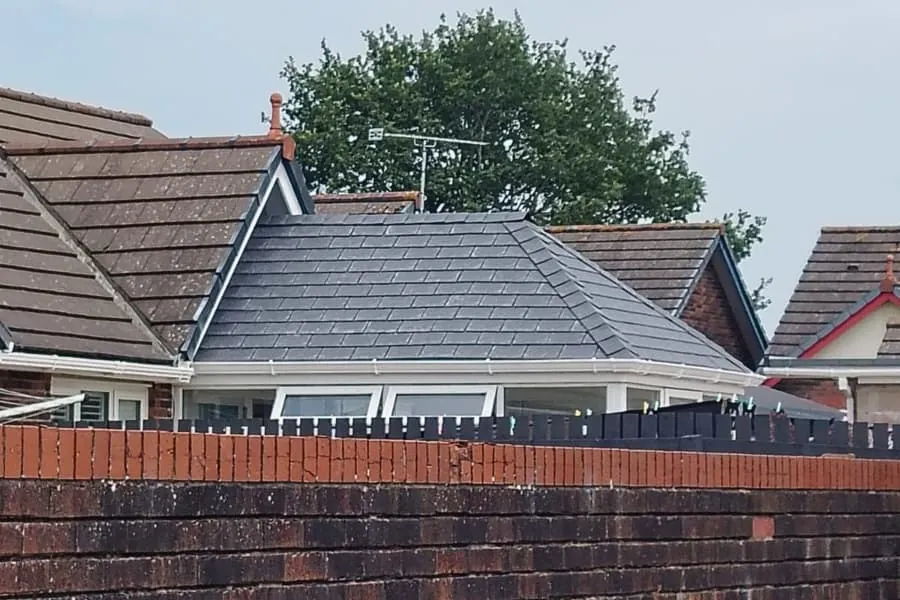
Nobody chooses a house for its flat roof. You inherit one, usually on a garage, a rear extension or the top of a bay window, and you think about it for the first time when a brown ring appears on the ceiling underneath. Most of the flat roofs we get called to in Southport are small - somewhere between 6 and 25 square metres - which is good news, because the whole job is measured in days rather than weeks. Three-layer felt laid well gives 15 to 25 years, so a great many of the extensions built round here in the late nineties and early noughties are arriving at the end of their covering all at once. The awkward part is that the three modern options are sold with equal confidence by people who only fit one of them. Here is what actually separates them, and what the work costs on this coast.
Southport has more flat roofs than it thinks
This is bungalow country, and bungalows breed flat roofs. Dormer cheeks and the small flat tops between dormers, porches over the front door, garages joined onto the side, single-storey rear additions that went up when the kitchen was extended. Walk any street in Birkdale or Ainsdale and half the houses have one somewhere, even if you cannot see it from the pavement.
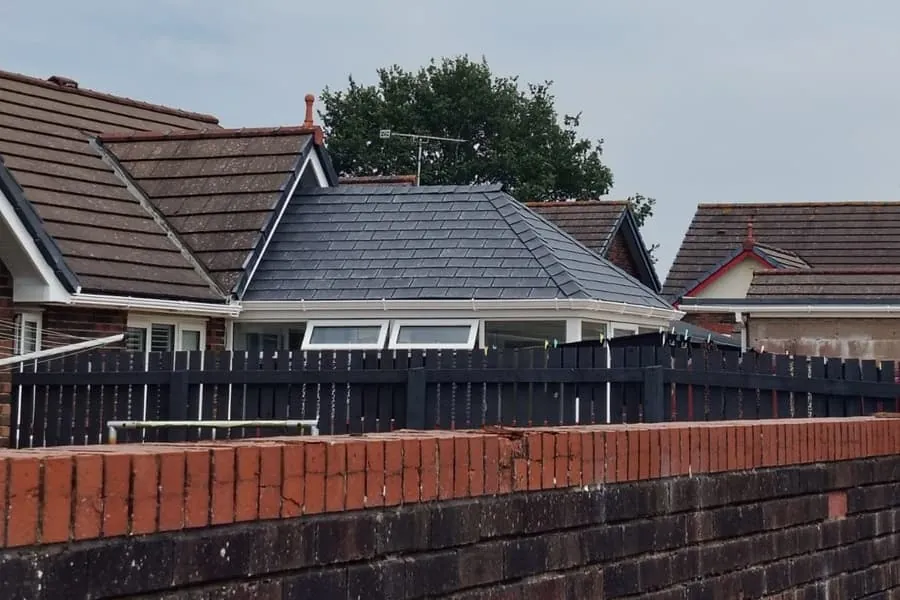
The older housing has them too, just in miniature. Plenty of the Victorian and Edwardian houses around Hesketh Park and Churchtown carry a small flat lead or felt roof over a canted bay, tucked behind a parapet where nobody ever looks. Those little roofs cause a wildly disproportionate share of the damp we get asked about, because they sit directly over a bedroom or a front room and there is no loft space in between to catch anything. Our flat roof repair work in Southport is split roughly evenly between full re-covers on garages and extensions, and fiddly one-day jobs on bay tops and dormer cheeks that have been quietly wetting a wall for years.
The three jobs people all call a flat roof repair
When somebody rings and asks what a flat roof costs, they could be asking about any of three completely different pieces of work, and the prices are nowhere near each other.
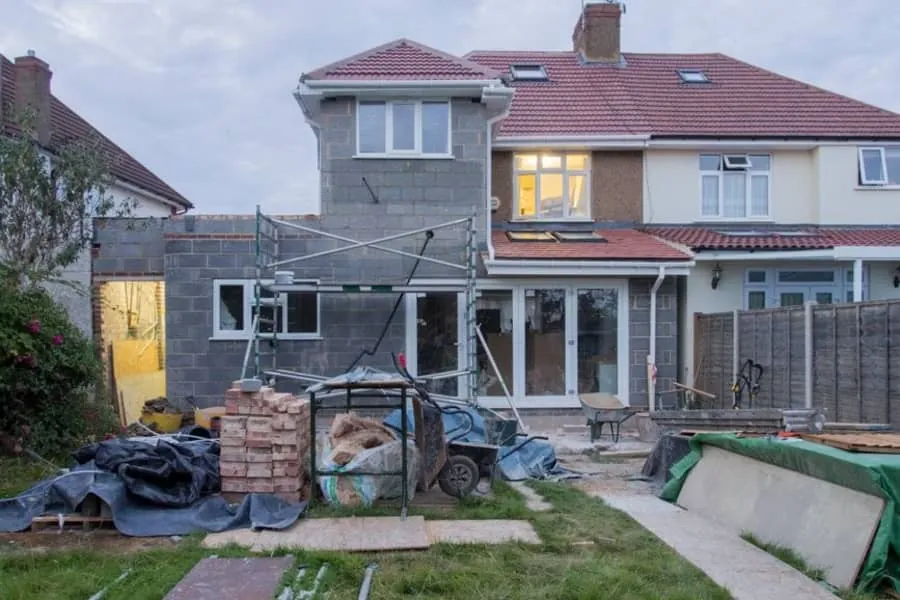
A patch deals with one identified fault - a split at an upstand, a lifted verge trim, a blister that has burst, an outlet that has packed with debris. It is right when the rest of the covering still has years in it and the deck below is dry. It is the cheapest honest answer to a leak, and there is nothing second-rate about it.
An overlay means bonding a new layer over the top of the old one. Quick, cheap, and the one to be careful with. If the existing covering is holding water in the boards below, an overlay seals that moisture in permanently, and you will find out in a year or two when the deck goes spongy. It also adds height, which can leave your door threshold or the bottom of the render sitting lower than the new surface. There are roofs where an overlay is a sensible call. There are more roofs where it is a way of hitting a price.
A strip and re-cover takes everything back to the deck, which is the only point at which anybody can honestly tell you what condition that deck is in. Bad boards get replaced, falls get corrected with new firrings, and the new covering goes onto something sound. It costs the most and it is the only one of the three that resets the clock.
Felt, rubber and fibreglass, without the sales pitch
Torch-on felt is three layers of reinforced bitumen bonded with a gas torch. It is the cheapest of the three, it can be dressed into complicated details, and any roofer in the country can repair it in an afternoon. Its weakness is seams - every lap is a joint, and joints are what open up. The hot works also need care near timber and soffits.
EPDM rubber goes down as a single sheet. On a garage roof that means no seams at all across the open area, which removes the most common failure point in one move. It is cold-applied, so no flame anywhere near your fascia, and it stays flexible in cold weather rather than going brittle. It will not tolerate a careless boot with a nail in it, and every detail depends on the adhesive being used properly at the right temperature - which is a genuine consideration when the wind is coming off the Irish Sea at eleven degrees in October.
GRP fibreglass cures into a hard, jointless shell you can walk on, which is why it suits balconies and roofs people actually stand on. It wants a clean OSB3 deck and a dry, reasonably warm day to lay, and it is less forgiving of a deck that moves - hairline cracks can appear over board joints if the substrate flexes. On the coast the practical catch is the weather window. A wet fortnight can push a fibreglass job back twice.
Salt air, for the record, is not the deciding factor for any of the three. What ages a flat roof here is ultraviolet light, the constant expansion and contraction of a dark surface in the sun, and wind trying to lift the edge details. Getting the perimeter trims and upstands right matters more than the brand on the roll. If you want an independent read on what a competent flat roofing contractor should be doing, the National Federation of Roofing Contractors publishes guidance on standards and member vetting.
Ponding, falls and the outlet full of sand
A flat roof is not flat. It is meant to be laid to a fall so water leaves it, and the British Standard for roofs of this type recommends designing to a fall of 1 in 40 so that the finished roof still achieves at least 1 in 80 once everything has settled. Plenty of the older roofs around Southport were laid closer to dead level, or had timber firrings that have since sagged and rotted.

You can spot the result yourself. Two days after rain, if there is still water sitting up there, or a dark tide-mark where water clearly sat for a week, the roof has a ponding problem. Standing water is not an instant leak, but it works on a covering constantly, it grows algae, and in a cold snap it freezes and prises at every seam it can find.
The local twist is what blocks the outlets. Wind-blown sand off the dunes at Birkdale and Ainsdale is fine, heavy and relentless, and it collects in exactly the corner where the water is supposed to leave. Pine needles do the same job out towards Freshfield. We wrote about the wider version of this problem in our piece on what a Sefton coast roof needs each year, and flat roofs are where it bites soonest - there is no slope to help the debris on its way, so whatever lands stays.
The insulation rule that catches people out
Here is the part that surprises people mid-quote. Re-covering a flat roof usually needs no planning permission at all, because replacing a covering like for like is repair rather than development - the Planning Portal’s guidance on roof work sets out where that line sits. Building regulations are a separate matter, and they do apply.
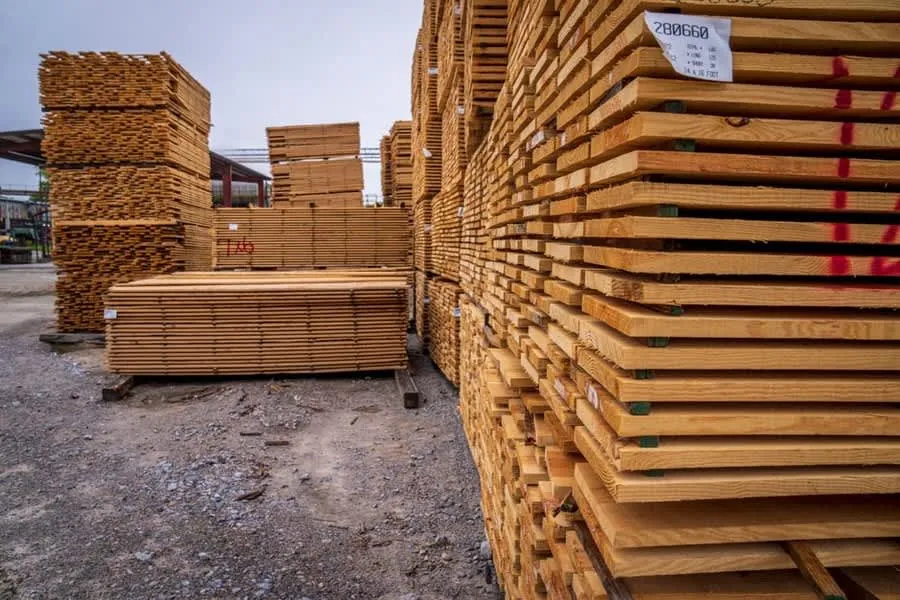
If you renovate more than half the area of a heated roof, it counts as work to a thermal element, and the finished build-up has to hit the standard for existing homes - 0.18 W/m²K for a flat roof, set out in Approved Document L on conservation of fuel and power. In practice that means a warm deck: insulation boards above the deck, under the covering, with the roof built up to suit. It affects more than the price of the boards, because raising the roof surface by 100mm or more has to be resolved at the door threshold, the abutment flashing and the verge.
Two things follow from that. The work is notifiable, so it goes through building control - Sefton Council for Southport, Formby and Crosby, West Lancashire Borough Council if you are out towards Burscough or Halsall. And a quote that is silent on insulation for a heated room is either a quote for a cold-deck job that no longer meets the standard, or a quote that is about to grow. An unheated garage is outside all of this, which is why garage roofs are the cheapest flat roofs to renew.
What it costs in Southport, and what moves the number
Real bands, for real jobs, on the sort of roof most people here have.
A patch repair to a split seam, a failed upstand or a blocked outlet is typically £180 to £500. Stripping and re-covering a garage or small extension roof of 15 to 20 square metres in EPDM generally runs £1,200 to £2,800, and our full roof repair cost breakdown sets that alongside the other jobs we price. Felt sits a little under EPDM on most roofs of this size, fibreglass a little over.
Five things move that figure, and the deck moves it most. New boarding adds roughly £25 to £40 per square metre, and nobody knows how much of it is needed until the old covering is off, so a quote with no allowance for boards is a quote with a gap in it. Insulation is next: building a heated roof up to a compliant warm deck is real money in boards, adhesive and reworked details.
Then access. A garage you can reach off a ladder is a different job from a first-floor dormer needing scaffold up a narrow side passage. After that it is the detailing - upstands, a rooflight, a soil pipe coming through the middle, an abutment against the house wall. Flat surfaces are quick. Everything sticking out of them is not. Last and least glamorous, disposal: old bitumen is heavy, and the tip charges by weight.
If two flat roof quotes come back hundreds of pounds apart, one of those five is almost always the reason, and our piece on why two roofers quote different prices goes through how to ask which one it is.
What fifteen minutes with a step ladder tells you
You do not need to walk on it, and on an old roof you should not. Get high enough to see the surface and work along it.
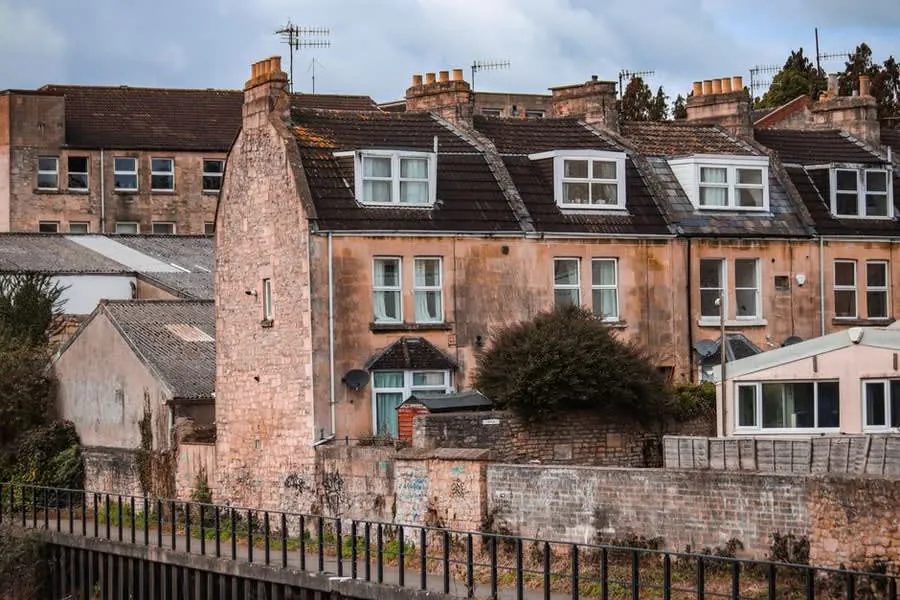
Standing water more than 48 hours after rain means the falls have gone. Blisters and bubbles mean moisture is trapped under the covering, and a burst one is an open hole. Bald patches where the mineral finish has gone show a covering with little life left in it. Splits at the upstands, where the roof turns up against a wall, are the single most common leak we find, because that is where the material is stretched hardest.
Then check the bits away from the middle. Is the verge trim lifted or loose at a corner - the corner the wind hits? Is the outlet clear, or is there a dune of sand and moss around it? From below, does the ceiling show one defined stain or a broad damp haze? And if anyone has been up there recently and told you it felt spongy underfoot, take that seriously. Spongy means the deck itself is wet, and no amount of new covering over a wet deck ends well.
If any of that sounds like your roof, get a proper look at it before winter rather than after. We survey flat roofs free across Southport, Formby, Crosby and the villages out towards Ormskirk, and you get a written quote that says which of the three jobs we think you need and why.
Frequently Asked Questions
How long should a flat roof last?
It depends far more on how it was laid than on what it was laid in. Three-layer torch-on felt put down properly on a sound deck with real falls tends to give 15 to 25 years. EPDM rubber and good fibreglass both sit in the 20 to 30 year bracket, and often beyond it. A single-layer felt overlay slapped on top of a wet deck can be leaking again inside three winters, whatever the leaflet said.
Is EPDM rubber better than felt?
On a small, simple roof like a garage or a rear extension, usually yes, because it goes down as one continuous sheet with no seams across the field of the roof, and seams are where flat roofs fail. Felt still earns its place on awkward roofs with lots of upstands and pipes, where a skilled roofer can dress it into details more easily. The bigger question is always the deck and the falls underneath, not the material on top.
Do I need building regulations approval to replace a flat roof?
If you are re-covering more than half of the roof area, it counts as renovating a thermal element and the build-up has to meet the current insulation standard, which for a flat roof on an existing home is 0.18 W/m²K. That means notifying building control through Sefton Council, or West Lancashire if you are out towards Burscough. A small patch repair does not trigger it, and neither does like-for-like work on an unheated garage.
How much does it cost to replace a flat roof in Southport?
A garage or small extension roof of roughly 15 to 20 square metres, stripped and re-covered in EPDM, generally lands between £1,200 and £2,800. New decking adds around £25 to £40 per square metre, and building the roof up to current insulation levels adds more again. A patch repair to a split seam or a blocked outlet is usually £180 to £500.
Free Roof Survey & Quote
Free roof survey and a fixed written quote, anywhere across Southport, Sefton and West Lancashire.