
5 August 2026
Mended Twice And Still Dripping? Here Is What Everyone Missed
A leak that survives two repairs was almost certainly mended in the wrong place both times. How water really travels through a Southport roof, and where it gets in.
You had somebody out. They went up, came down, said it was sorted, and took your money. Three weeks later there is a fresh tidemark on the ceiling.
So you got somebody else out. Different firm, different ladder, same confident diagnosis. And here you are again with a towel on the landing carpet.
At this point most people conclude that roofs are simply like this, or that they have twice been unlucky with roofers. Neither is true. What has almost certainly happened is that your leak has now been mended twice in a place where there was nothing wrong.
The bit nobody explains
Water does not fall vertically once it is inside your roof.
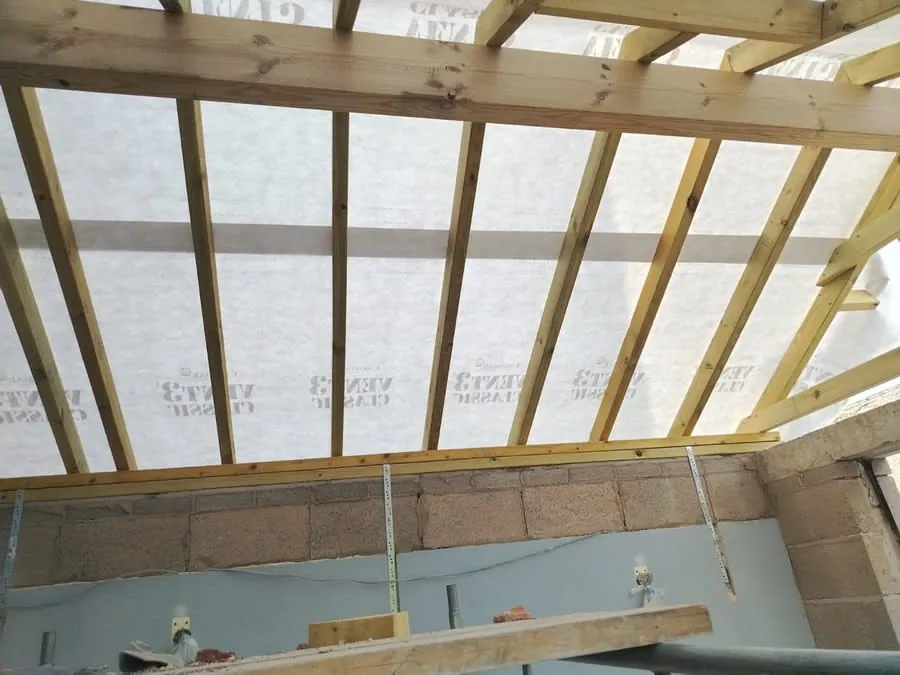
It gets in somewhere - a slate that has lifted, a hairline split in a piece of lead, a mortar joint that has opened up. What it meets on the other side is not your bedroom ceiling. It is the top edge of a rafter, or the underside of the membrane sagging gently between two of them.
And there it stops falling and starts running.
It follows whatever slope it has landed on until something interrupts it: a nail point, a lap in the membrane, a low spot, a tear. Only at that interruption does it finally drop onto plasterboard and begin the slow business of announcing itself in your ceiling.
That journey might be six inches. On a wide, shallow bungalow roof of the sort Southport has thousands of, it can be several metres, sideways, before anything is visible from below.
Which means the stain in your spare room might be directly beneath the hole. Or the hole might be over by the chimney, or three rafters along, or on the opposite pitch entirely.
Anyone who goes up, locates the point above your stain, mends whatever looks tattiest and comes back down is not diagnosing anything. They are placing a bet. Sometimes it pays. Frequently it does not, and the second firm makes exactly the same wager a fortnight later.
Where Southport roofs actually let water in
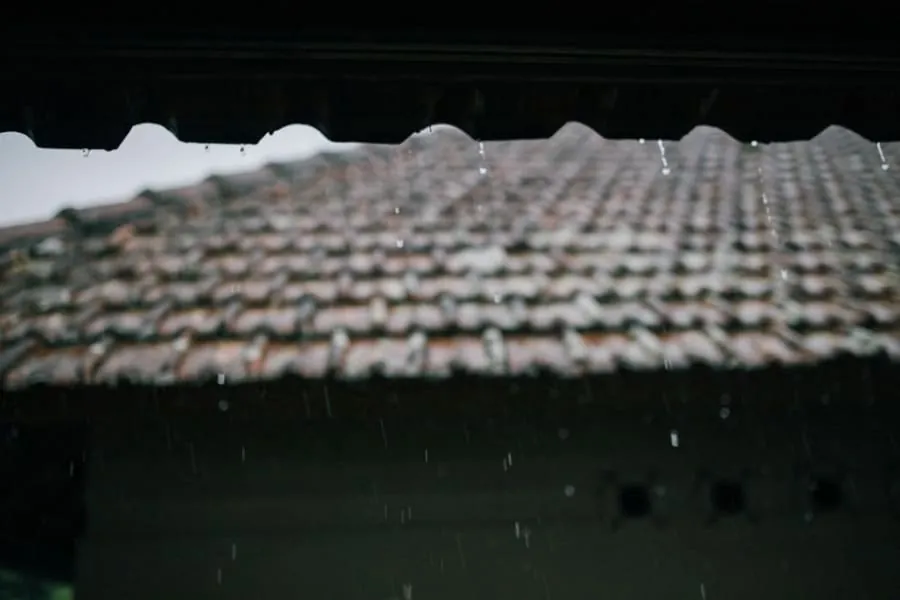
After a thousand-odd repairs across one town you build a mental shortlist. Around here, the overwhelming majority of leaks begin in one of five places - and only one of those five involves the slates that everybody blames.
Valleys, and the sand in them. Where two slopes meet, every drop of water off both of them funnels into one channel. The big Victorian and Edwardian villas around Birkdale Park, the Promenade and the Lord Street streets have several valleys apiece, which is why they lead this list. Block one and water backs up sideways beneath the slates on both slopes simultaneously - so the classic giveaway is two separate stains appearing in two separate rooms during the same wet fortnight. What blocks them here is not simply leaves. Southport sits behind one of the larger dune systems in England, and fine sand travels a very long way inland on a westerly. It settles in the channel, binds with moss, and forms a silt mat that holds water permanently against the covering.
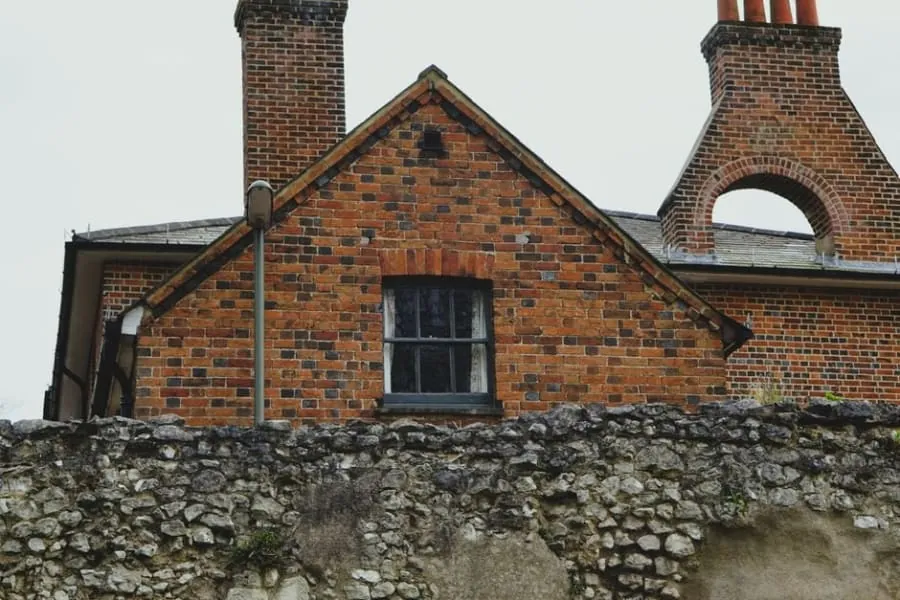
Chimney stacks. Four exposed faces, a bed of mortar as their only roof, and a fiddly lead junction all the way round the bottom. Split flaunching sends water straight down the inside of the flue. Failed flashings let it in at roof level. Stacks punch enormously above their weight in the leak statistics, and on this coast there is an extra accelerant: salt riding in on the wind, crystallising inside porous brick and pushing the faces off from within. It is why so many Southport chimneys are eroded on one elevation and untouched on the other.
Verges and ridges. The edges of everything. Wind gets underneath an edge, lifts, and peels inwards - which is why damage after a bad night starts at a verge, a hip or the apex rather than out in the middle of a slope. On the genuinely exposed frontages at Ainsdale, Marshside and Banks, where there is nothing between the houses and the estuary, this is the first place anyone should look.
Shallow pitches. Southport has an unusual quantity of bungalow stock, especially through Ainsdale and Birkdale. A roof sitting at around twenty degrees gives wind-driven rain a real chance to push back up underneath the covering, which a steep Victorian pitch simply never offers it. These leak in ways that baffle people, because the roof behaves impeccably for months and then misbehaves the moment the weather swings round.
Slipped or cracked slates. The one everybody assumes, and honestly the least common of the five on a roof that is otherwise sound. Sea air moves it up the table somewhat, since the nails holding slates in place corrode far faster within a mile or two of the water than they ever would inland.

How a leak is supposed to be found
The method is unglamorous and it works.
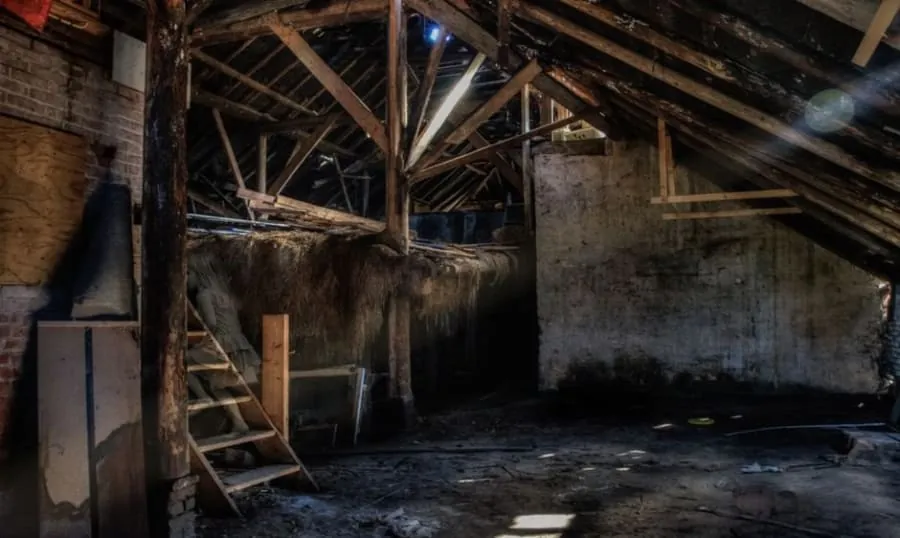
It starts inside, not outside. Somebody gets into the loft with a torch, and ideally does it while rain is actually falling, because a dry loft in August tells you far less than a wet one in November.
Then it is a matter of following the evidence uphill. Wet timber, dark staining, damp membrane, water beaded on nail points. You trace all of it back to the highest wet point you can find, because water only ever travels downwards once it is in there. Whatever is above that highest damp spot is where you go looking from the outside.
Only then does anyone climb onto the covering, and by that stage they are checking a specific hypothesis rather than wandering about hoping something looks broken.
Where there is no loft to get into - a room in the roof, a dormer, a flat section over a bay - it gets harder and you fall back on correlating the symptom with the geometry. Which brings us back to the wind question, and why it is worth paying attention to.
When it leaks tells you where it leaks. Only in weather off the sea? Something wind-driven, on a west-facing elevation, quite possibly a verge or a flashing. Only after hours of steady rain regardless of direction? Something is filling up and overflowing - a valley, a gutter, an outlet. Constantly, in any weather, at the same rate? That is a genuine hole rather than a detail being overwhelmed, and it is usually the easiest of the three to find.
If you take nothing else from this article, take that. Noting the conditions each time it happens is genuinely useful information, and most people never think to.
Why the tin of black goo makes things worse
Somewhere in the life of every stubborn leak, somebody reaches for sealant. Bituminous compound smeared along a flashing. A tube of roof-and-gutter mastic. In the genuinely unfortunate cases, an entire roof sprayed with elastomeric coating by a firm who knocked at the door.
Three things are wrong with this.
It ignores why the gap appeared. Lead splits because lead expands and contracts with temperature and eventually work-hardens along the fold. Filling the split does nothing whatever about the movement, so it opens again a couple of inches from your repair.
It seals moisture in. Roofs need to dry out. Coat the outside while water is still arriving from behind - which it is, because the actual fault is untouched - and you have built yourself a roof that stays permanently wet inside. That is how battens perish and rafter ends go soft.
And it makes the correct repair dearer. Lead smothered in bitumen has to be cleaned up or replaced before anyone can dress it properly. You have added cost to a job that was always going to happen eventually.
There is one honest exception. If it is January, water is pouring in, and doing the job properly needs conditions nobody currently has, then sealing something to buy a fortnight is entirely sensible. It just has to be understood by both sides as a stopgap, with the real repair already in the diary.
Before you assume it is a leak at all
Worth ruling this out first, because it is extremely common and from underneath it looks near enough identical.
Your house generates warm, damp air continuously - showers, cooking, the kettle, washing on an airer, everybody breathing. It rises. If it finds its way into the loft and meets the cold underside of the roof, it turns straight back into water, exactly as it does on a car windscreen in October.
The signs are distinguishable once you know them. Droplets or frost on the underside of the membrane on a cold morning. Wet nail points pushing through. Damp spread thinly across a wide area rather than concentrated in one defined patch. And the clincher: it is worse in winter and disappears in summer, whereas a real leak tracks rainfall, and Southport gets plenty of rain in both seasons.
Southport has a particular vulnerability here, and it comes back to bungalows again. A shallow roof encloses a small volume of air with barely any movement through it. The same moisture drifting up from the house produces a far higher humidity in that space than it ever would in a tall Victorian roof void with proper airflow. If you own a bungalow in Ainsdale or Birkdale with a damp loft that no one can find a leak in, the answer is nearly always ventilation at the eaves rather than anything on the outside of the roof.
The cure for condensation is airflow - vents in the soffits, often something at the ridge as well - and no amount of work on the covering will touch it. People spend real money on roofs to solve problems that a hundred pounds of eaves ventilation would have finished off.
Questions worth asking before anybody starts
You do not need to know anything about roofing to ask these, and the answers are revealing.
Are you going in the loft? If the answer is no and there is a perfectly accessible loft hatch, you are about to pay somebody to guess.
What exactly failed? You should finish the conversation able to explain it to somebody else. Lead split along a fold. Mortar blown out of a joint. A nail corroded through. “It wanted sealing” is not a diagnosis, it is a description of what they intend to do next.
Why is the fault there and the stain over here? A roofer who can walk you through the route the water is taking has genuinely worked it out. One who looks blank has not.
What happens if it comes back? There should be a workmanship guarantee, it should be in writing, and asking for it should not cause any awkwardness whatsoever.
The short version
A leak that has been mended twice and is still going is not bad luck, and it is not evidence that your roof is beyond saving. It is evidence that nobody has yet found where the water is getting in.
Find that, and a repair that has failed twice tends to be embarrassingly straightforward - a length of lead, a cleared valley, a couple of hours and a few hundred pounds.
Keep mending the ceiling stain instead, and you can do this indefinitely.
If you want somebody to actually trace it, the roof leak repairs page sets out how that survey works, and it costs nothing to have one. Or if the leaks have started arriving from a different spot each winter, that is a different conversation altogether - repair or replace covers how to tell.
Frequently Asked Questions
Why does my roof leak again after being repaired?
Because the repair almost certainly went in above the ceiling stain rather than at the point water is entering the roof. Water lands on a rafter or the back of the membrane and runs downhill before it drops, so the visible mark can sit a long way from the actual gap. Patch the mark and you have mended a sound piece of roof while leaving the fault wide open.
Why does my roof only leak when the wind blows a certain way?
That is a clue rather than a complication. On the Sefton coast a leak that appears only when weather comes off the sea usually means something wind-driven on a west-facing slope - a verge, a flashing, or rain pushing back up beneath a shallow pitch. A leak needing hours of steady rain before it shows is far more likely to be a valley or gutter filling up and backing water under the covering.
Will roof sealant fix a leak permanently?
No. Sealant bridges a gap without addressing why the gap opened, and it commonly makes matters worse by trapping moisture inside the roof structure and by making the correct repair harder and dearer later. Treat it strictly as a stopgap while a proper repair is arranged.
How do roofers actually find a leak?
By working from the inside outwards. That means getting into the loft, ideally while rain is falling, following the wet trail back up the rafters and the underside of the membrane to the highest damp point, then matching that position against the detail on the outside of the roof directly above it.
Can sand really block a roof valley in Southport?
Yes, and it is one of the more distinctive local causes. Southport sits behind a large dune system, and fine wind-blown sand settles in valleys, gutters and flat-roof outlets where it binds with moss into a dense silt. That silt holds water against the covering and can back it up beneath the slates on both sides of a valley at once.
Free Roof Survey & Quote
Free roof survey and a fixed written quote, anywhere across Southport, Sefton and West Lancashire.