
4 August 2026
Storm Took Your Slates? What To Do First, And How Claims Actually Get Settled
Southport is not a wet town - it is an exposed one. What counts as storm damage, the first hour, the evidence insurers really want, and the vans that follow every gale.
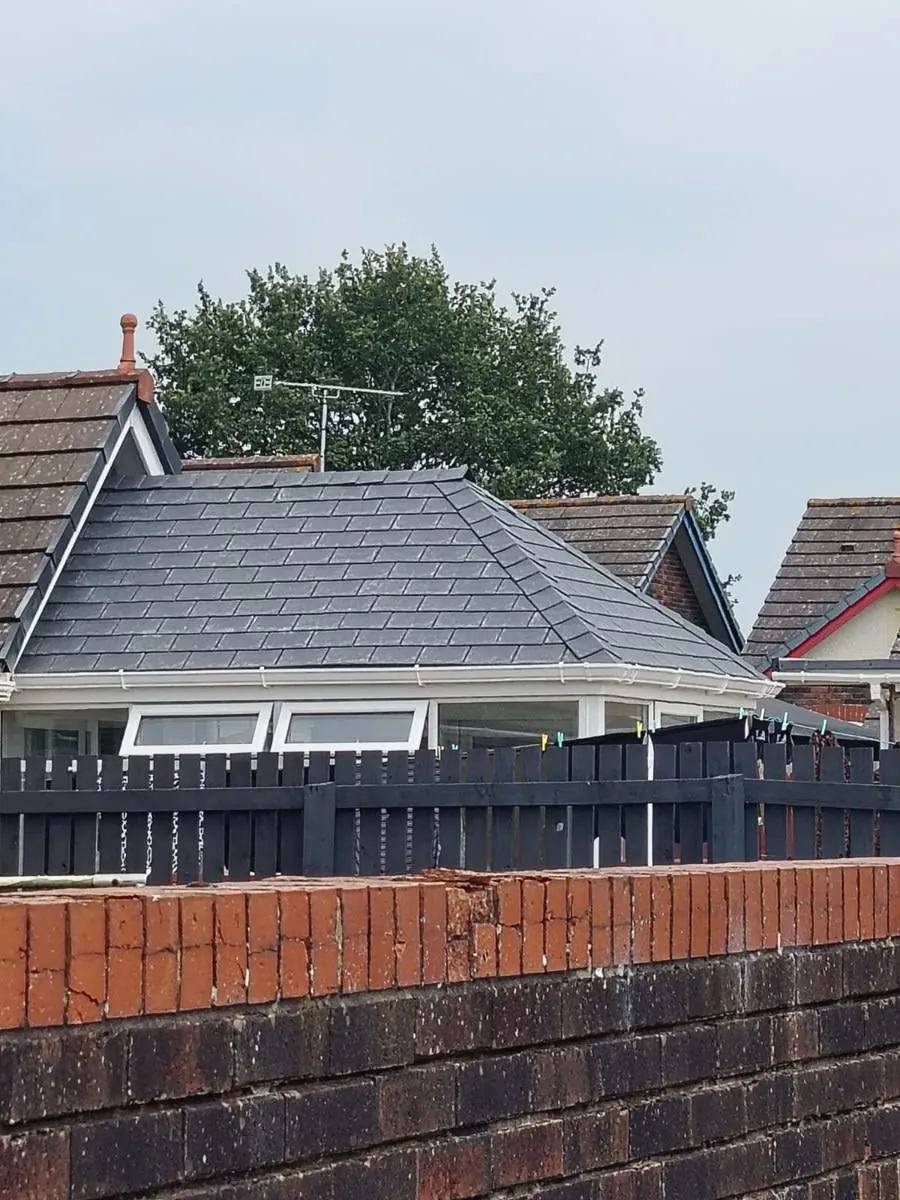
There is a persistent belief that a roof in the North West gets destroyed by rain, and around here the numbers simply do not support it.
The Met Office long-term average at Crosby, the closest station with a proper record of the Sefton coast, comes out at roughly 824mm a year. That is less than Manchester and nowhere near the Lakes. By English standards Southport is unremarkable for rainfall.
What Southport is, is completely exposed. There is no high ground whatsoever between here and Ireland. An Atlantic system crosses miles of open sand and marsh to reach you and arrives with nothing having slowed it down, carrying air thick with salt. Storm Éowyn on 24 January 2025 put an amber wind warning across Merseyside and went on to be the fiercest windstorm Britain had seen in more than a decade.
If you have come downstairs to slates on the lawn, here is what to do about it.
What insurers mean by storm damage
Most confusion lives here, so it is worth being exact.
What a buildings policy pays out on is damage that happens suddenly, as a result of an insured event. Gradual deterioration, ordinary wear, and anything traceable to a house not being maintained all sit outside it, and no standard UK policy has ever suggested otherwise.
Policies generally define a storm by wind speed, commonly around the 55mph mark, and some stretch it to include torrential rain, hail or heavy snow. When a claim goes in, the insurer pulls Met Office records for your postcode on the date you have given them. The Met Office publishes named storms and their effects through its UK Storm Centre, and where your damage lines up with a named storm your position is considerably stronger.
Claims get refused on causation rather than on damage. If wind removed three slates from a roof whose nails had already rusted through, the insurer’s argument will be that the storm exposed the problem rather than created it. Worth understanding before you pick up the phone, because it explains exactly what they are going to be looking for.
And there is a wrinkle specific to this coast. Salt shortens the life of nails and fixings considerably, so roofs a mile from the sea reach that threshold sooner than roofs a few miles inland. Loss adjusters working Sefton know this perfectly well. A roofer who tells you honestly, up front, that your slates went because the fixings had gone rather than because of the wind is doing you a favour - because the adjuster will reach that conclusion anyway, and it is far better heard early.
The first hour
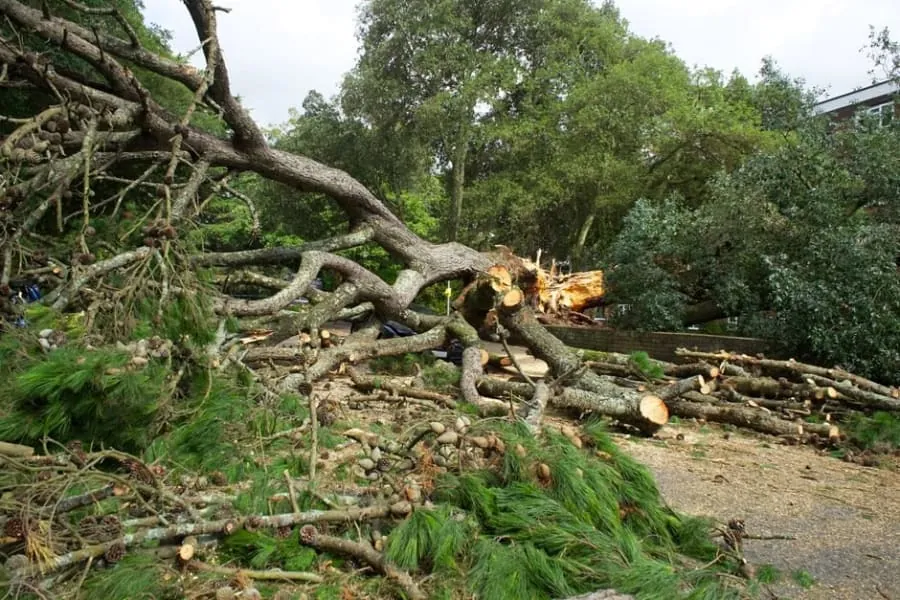
Before anything else: stay off the roof, and keep everybody away from the ground beneath it. A dislodged ridge tile is several kilos of fired clay sitting at the highest point of your house, and the next gust can drop it through a conservatory, a windscreen or a person. Cordon the area off if you can manage it.
Inside, deal with the water. Buckets under drips, furniture and anything valuable moved clear. If a ceiling has gone baggy with trapped water, the counter-intuitive move is the correct one - pierce it deliberately with a screwdriver over a bucket and let it drain somewhere you have chosen. Everything in you will object. Do it anyway: a screwdriver hole is filler and a coat of paint, whereas a ceiling that lets go under its own weight takes the light fitting and the carpet with it. If water is anywhere near a socket or a light, kill the power to that room at the consumer unit.
Then photograph everything, from as many safe angles as you can find at ground level. Include the slates that came down and where they landed. Photograph the damage indoors as well, and do it while it is still wet - that evidence is gone by the time things dry out, and it is precisely what a loss adjuster wants to see.
Once the immediate danger is handled, get temporary cover organised and hold on to the receipt. Insurers expect you to take reasonable steps to prevent things getting worse, and the cost of doing so is normally recoverable within the claim.
One local note on temporary cover: a sheet held down by a couple of bricks is decoration on the Sefton coast. The next gust off the sea removes it and you are back where you started. Whatever goes on has to be mechanically fixed to stand any chance.
The evidence that decides it
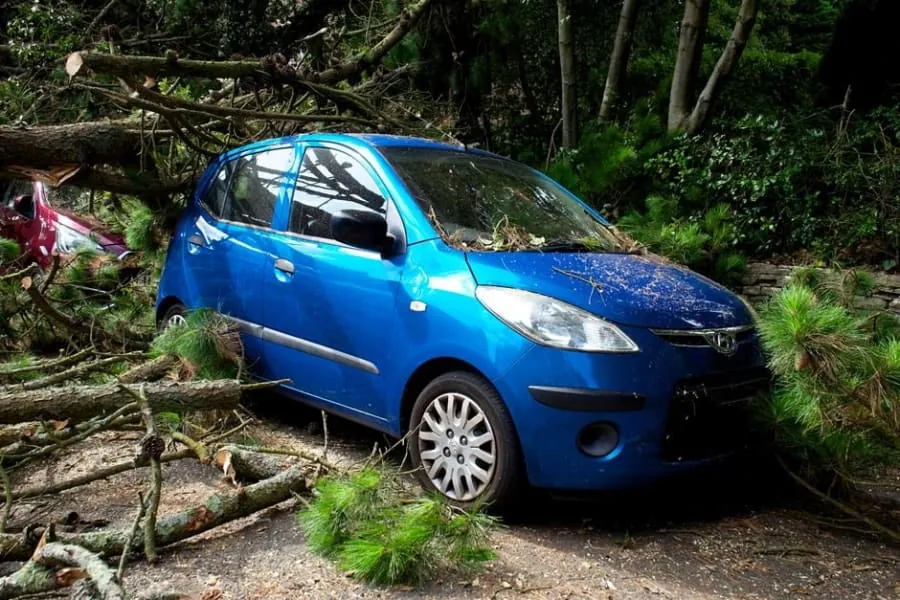
Claims live and die on documentation far more than on the severity of the damage. What actually supports one:
Dated photographs, ideally from before the temporary work as well as after. Wide shots establishing the property, close-ups establishing the failure.
A written report from somebody who physically stood on the roof, describing what failed and - the important part - the mechanism. “Wind uplift at the verge has lifted the end slates and broken the mortar bedding” is worth something. “Roof damaged” is worth nothing at all. The mechanism is what ties the damage to the storm.
An itemised quote, so the insurer can see the cost of each element rather than being asked to approve one lump sum on trust.
The date and time it happened, as accurately as you can manage, because that is the figure being checked against weather records.
You are generally entitled to use a roofer of your own choosing rather than one the insurer appoints, though they may want to approve the cost first. If a claim is declined and you believe it has been handled unfairly, the Financial Ombudsman Service will review it free of charge once you have been through the insurer’s own complaints process.

Telling the two apart
The whole claim turns on this distinction, and it is usually possible to see which one you have.
Storm damage is sudden and concentrated. It gathers at edges - ridge, hips, verges, the first course above the gutter - because that is where wind gets underneath and lifts. The broken surfaces are clean and bright. Nails are pulled or sheared rather than rusted to nothing. It was not there last week.
Wear is gradual and spread out. Failures turn up across the whole roof rather than along one edge. Nails have corroded through. Mortar has perished generally instead of being broken. There is often a history of the same thing happening in previous years.
The two are not mutually exclusive, and a decent report says so. A storm can genuinely damage a roof that also happens to be nearing the end of its life, and separating those two things properly is part of the job.
If it does turn out to be wear rather than weather, that is not a disaster - it just means this is maintenance rather than a claim. Whether to repair or replace walks through how to work out which of those you are facing.

The vans that arrive after every gale
Within days of any serious blow, vans appear in the affected streets and people begin knocking on doors offering free roof inspections. Some are legitimate local firms being enterprising. A significant number are not, and the script is consistent enough to be worth writing down. Southport’s large retired population gets targeted particularly hard, which is reason enough to pass this on to a neighbour.
It generally runs like this. A free inspection is offered, usually with something urgent attached - they happen to be working on a roof round the corner, they noticed something from the road. Up the ladder they go. Down they come holding a photograph of alarming damage, which may or may not be your roof. There is pressure to agree on the spot, frequently with a discount that expires today, and a request for cash up front. The work is then not done, done badly, or expands dramatically in scope once the money has moved.
The defences are simple enough. Never agree to roofing work at your front door. Never pay a cash deposit to somebody who came to you rather than the other way round. Ask for a written quote and take the time to get a second one from a firm you found yourself. Check for a real, verifiable trading address and public liability cover, and look for membership of something like TrustMark or the NFRC.
Worth knowing too: contracts agreed at your home carry cancellation rights, typically fourteen days, and any trader who does not tell you that in writing is already breaking the rules.
Getting the repair done properly afterwards
Once the drama is over, the repair itself should be unremarkable. What matters is that somebody looks beyond the obvious.
The three gaps on the front elevation are what you spotted from the drive. Uplift strong enough to remove those has been working on their neighbours too, and a slate that lifted and settled back down looks completely untouched from the ground while letting water past at the next bout of driving rain. A proper post-storm repair takes in the whole roof, every elevation, with particular attention to ridge, hips and verges - not simply the side facing the street.
Materials have to match. On Southport’s Victorian and Edwardian streets that means slate that matches, sourced reclaimed where the original is long out of production, because a patch of modern concrete tile in a slate roof is visible from the pavement for good and will be noticed when you sell.
And this is the moment to ask about fixings. If salt has already finished off one set of nails, putting the same specification back gets you the same outcome in due course. Corrosion-resistant fixings cost more and are worth every penny within sight of the water.
Then get the finished work photographed, for your own records and because it closes the claim out cleanly.
Storms will keep arriving - that is the deal you accepted in exchange for living somewhere with that view. What is within your control is how fast the water gets stopped, how well the damage is documented, and who you allow up the ladder.
If something has come off and you want it looked at by somebody actually based in the town, the storm damage repairs page explains how the repair and the insurance paperwork get handled together.
Frequently Asked Questions
What wind speed counts as a storm for insurance?
Most UK buildings policies define a storm using a wind speed threshold, commonly somewhere around 55mph, and some also take in torrential rain, hail or heavy snow. Insurers check Met Office records for your postcode on the date you give them, so being accurate about when the damage happened genuinely matters.
Is storm damage to a roof actually covered?
Usually, provided the storm caused the damage rather than simply revealing something already failing. Sudden, localised damage with clean fresh break surfaces is normally accepted. Damage traced back to corroded nails, perished mortar or general age gets reclassified as wear and tear, which no standard policy covers.
Should I let a roofer who knocks at the door inspect my roof after a storm?
We would strongly advise against it. Unsolicited post-storm roof inspections are among the most persistent doorstep scams in Britain, and Sefton Trading Standards sees a fresh wave after every significant blow. Choose a firm yourself, and never agree to work or hand over a deposit at your front door.
How quickly do I need to report storm damage?
Within days rather than weeks. Delay makes it harder to tie the damage to one specific storm and hands the insurer an argument that further damage could have been prevented. Photograph everything immediately, get the roof made safe, and keep the receipt for that work.
Why does storm damage in Southport start at the edges of the roof?
Because wind damages roofs by getting underneath an edge and lifting. Ridge tiles, hips, verges and the first course above the gutter are all edges, so they go first while the middle of the slope usually rides the storm out. On the open frontages at Ainsdale, Marshside and Banks, where nothing stands between the houses and the estuary, that pattern is especially pronounced.
Free Roof Survey & Quote
Free roof survey and a fixed written quote, anywhere across Southport, Sefton and West Lancashire.