
31 August 2026
How To Choose A Roofer In Southport: Check The Claims
Every roofer's advert in Southport makes the same five claims. Here's how to verify each one in minutes - trading history, insurance, guarantees and reviews.
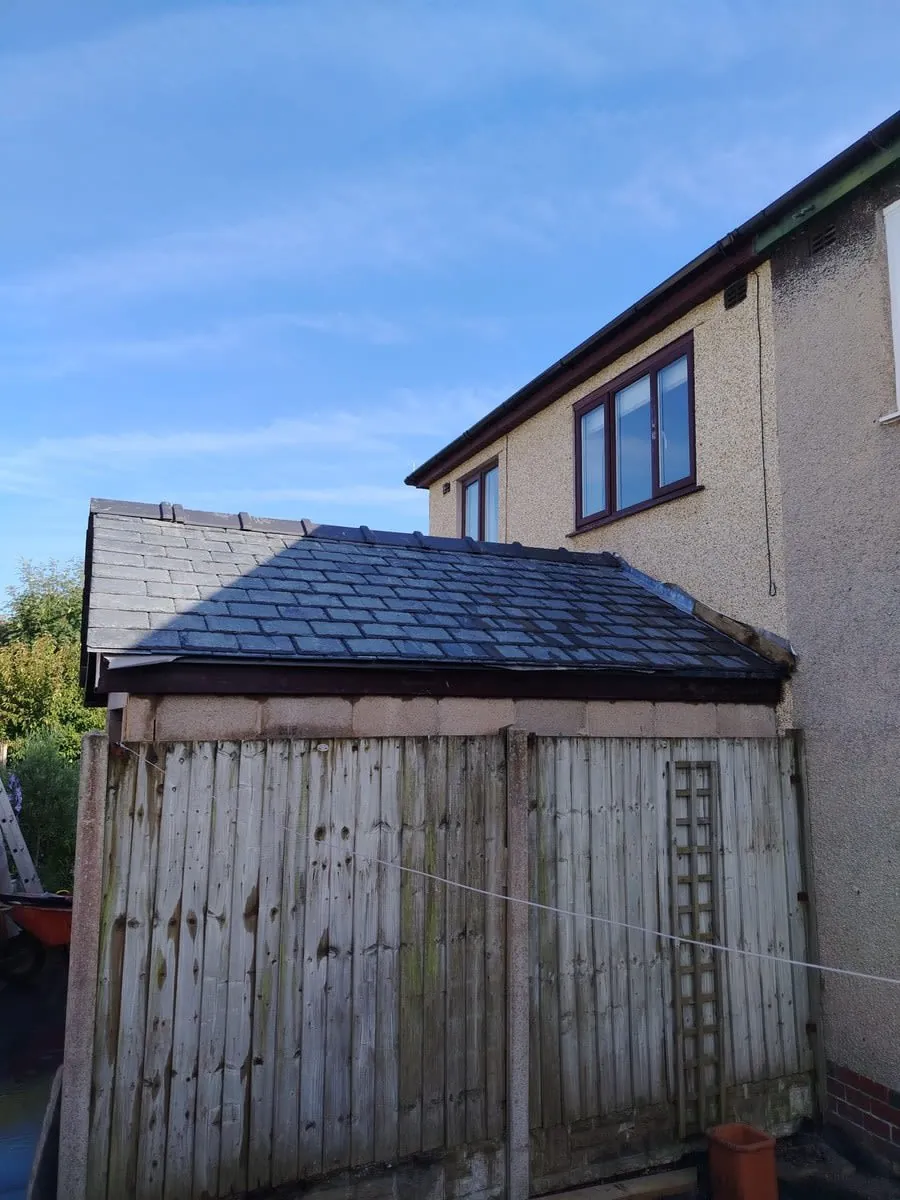
Type “roofer near me” from a Southport postcode and the results all sound identical. Established 25 years. Fully insured. All work guaranteed. Local family firm. Five stars. The words have been repeated so often they’ve stopped carrying any information - which is a problem, because picking the wrong firm for a re-roof is a five-figure mistake, and picking the wrong one for a repair usually means paying twice.
Roofing has no licensing system in England. Anyone with a ladder and a Facebook page can trade tomorrow. So the vetting is yours to do - and the good news is that nearly every claim in a roofer’s advert can be checked from your kitchen table in under an hour. This is how.
Every advert makes the same five claims
There’s a reason the wording never varies: those five claims are what homeowners say they want to hear. They are also, conveniently, the five things almost nobody verifies. The gap between “claimed” and “checked” is where the bad firms live.
None of this means the claims are usually false. Most roof repair firms serving Southport are exactly what they say they are. But the honest firms and the cowboys use the same vocabulary, so the words alone cannot sort one from the other. Treat each claim as a question to be answered rather than a fact to be absorbed, and the sorting happens fast. Take them one at a time.
“Established 25 years”: check the paper trail, not the boast

Years of experience is the easiest claim to make and the easiest to test. If the firm is a limited company, the Companies House register is free, public and takes two minutes. You get the incorporation date, the registered address, the named directors, and the filing history.
Three things to look at once you’re there. First, the date - “established 1999” sits oddly next to a company formed eighteen months ago. Second, the directors’ other appointments. A director trailing a string of dissolved roofing companies behind them has a pattern you’re entitled to ask about: firms that fold whenever the complaints or debts pile up, then restart under a fresh name, are exactly the ones a paper guarantee is worthless from. Third, whether accounts are filed and up to date - a small thing, but firms that keep their filings straight tend to keep their scaffolding straight.
Sole traders don’t appear on the register, which isn’t a red flag in itself - plenty of good one-van outfits around Southport have traded that way for decades. It just moves the burden onto other evidence: dated photos of past jobs, addresses you can drive past, and reviews stretching back years rather than weeks.
“Fully insured”: the certificate has a job description on it

“Fully insured” means nothing until you’ve seen the document, because insurance certificates describe what activity is covered - and that description is where the trouble hides. A policy written for general building or property maintenance may exclude work at height, hot works, or roofing altogether. If a slate goes through a conservatory two doors down, the difference between those wordings is the difference between an insurer paying and you suing a man with a van.
Ask for the public liability certificate, and read three lines: the expiry date, the indemnity limit (£2 million is the usual floor for domestic work, £5 million is common), and the description of the insured trade. It should say roofing, and if the firm employs anyone, there should be employers’ liability cover alongside it - that one is a legal requirement, not a nicety.
A legitimate firm hands this over without friction, usually by email within the hour. Hesitation, excuses, or “the office has it” for a week - that’s your answer, delivered a different way.
“All work guaranteed”: a guarantee is only as good as who stands behind it
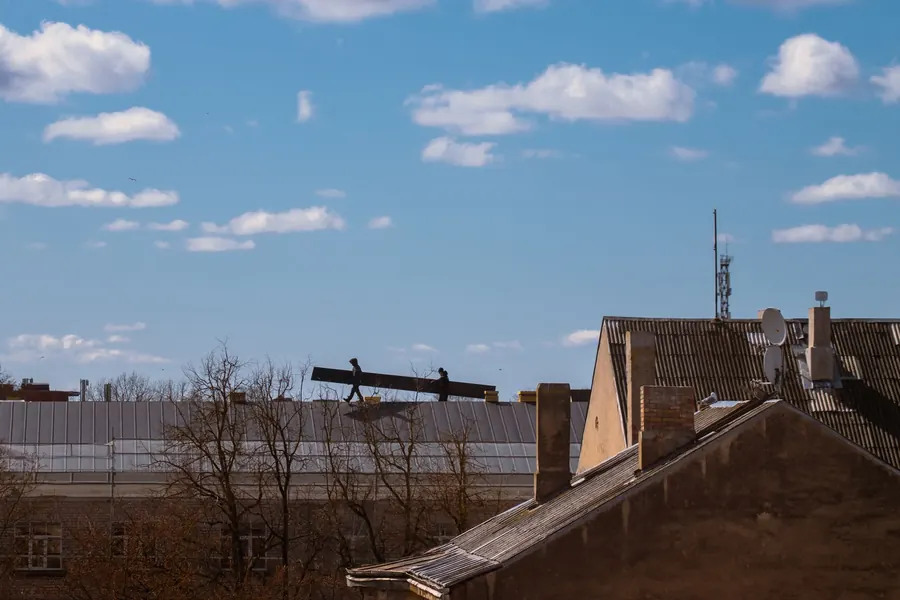
Every roofer guarantees their work. The question that matters is what happens to that guarantee if the firm stops existing - and small building firms stop existing all the time, sometimes deliberately.
A written workmanship guarantee from a trading firm is worth having, and you should have it in writing before work starts: what’s covered, for how long, and what voids it. But it’s a promise from the company, and it’s exactly as durable as the company is. This is why the Companies House check earlier matters twice over - a ten-year guarantee from a firm whose directors dissolve a company every three years is a decoration.
For bigger jobs, ask about an insurance-backed guarantee. An IBG is underwritten by an insurer, so the cover survives the firm. Schemes run through TrustMark, the government-endorsed quality scheme, often include one, and TrustMark’s register is searchable - so “we’re TrustMark registered” is another claim you can turn into a fact in half a minute. The same goes for membership of the Federation of Master Builders or the NFRC: real memberships appear in the associations’ own directories. Logos prove nothing; listings do.
“Local family firm”: local has a technical meaning on this coast
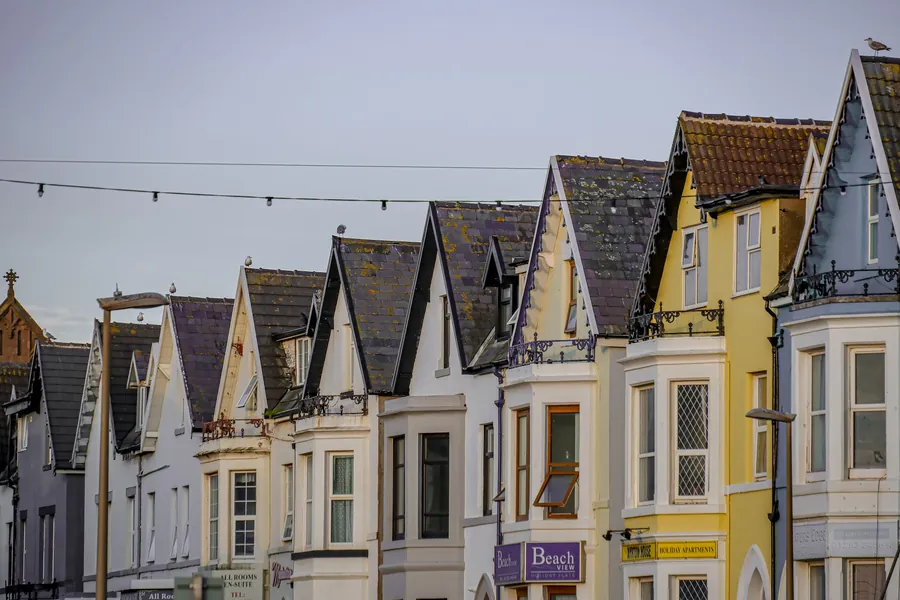
Inland, “local” is a sentiment. In Southport it’s a specification. This town’s roofs live with salt carried off the Irish Sea, sand blown up from the Birkdale and Ainsdale dunes, and a prevailing south-westerly that hits the seaward side of town at full strength. Those conditions change how a roof should be built, and a roofer who genuinely works this coast will say so without being prompted.
So make “are you local?” a technical question. Ask what fixings they use near the seafront - the right answer involves stainless steel or properly coated alternatives, because standard galvanised nails corrode years early in salt air. Ask how they detail ridges and verges on exposed elevations - you want to hear about mechanical fixing and wind uplift, not just mortar. Ask what they find in gutters around Marshside or Hillside - anyone who has actually cleared them knows the answer is sand, in quantities that surprise people who’ve never seen it.
A firm from forty miles inland can be perfectly competent and still quote you a roof built to inland assumptions. It’ll be cheaper. It will also age faster, three streets from the beach.
“Rated five stars”: read the geography, not the rating

Star ratings compress away everything useful. Twenty reviews averaging 4.9 tells you almost nothing; the reviews themselves tell you plenty, if you read them for the right details.
Look at where the jobs were. A firm that really works Southport gets reviews that mention Southport, Birkdale, Ainsdale, Churchtown, Formby - real streets, real weather, the storm that came through that winter. A review profile with glowing but placeless praise, or jobs scattered across half of England, belongs to a different kind of operation. Look at dates: a steady trickle over years beats a burst of ten five-star reviews in a fortnight, which is usually a sign of a profile being dressed. And look for the reviews that describe a problem - a leak that came back, a delay - and how the firm responded. Nobody’s jobs all go perfectly; what you’re buying is how they behave when one doesn’t.
Then cross-reference. The same firm name on Google, on a checkable trade register, and on paperwork with a real local address is a firm that exists in one consistent shape. Names that shift between platforms deserve the caution they trigger.
What a vetted shortlist looks like by Friday
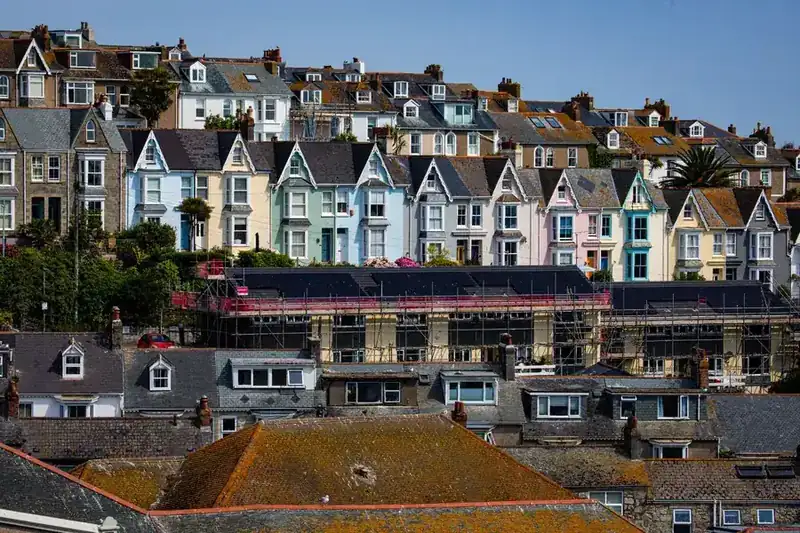
Put the checks in sequence and the whole exercise is an evening’s work. Pick three candidates. Run each through Companies House and whatever registers they claim. Ask all three for their insurance certificate. Have all three up on the roof or at least up a ladder before they price anything - a figure produced from the pavement is a guess with a signature on it, and if the job is urgent our emergency roof repair page covers what a proper make-safe visit looks like. Then get all three quotes in writing and compare what’s actually specified, not just the totals - we’ve written separately about why roofing quotes differ so much in Southport, and the short version is that the cheapest number is often for a smaller job.
Two candidates will usually survive that process. Either of them will probably do you a good roof. That’s the point of vetting: not to find a unicorn, but to make the bad outcome hard to reach.
One last thing on deposits, because it’s where the worst stories start: small repairs shouldn’t need money up front at all, and on larger jobs a deposit should be modest, invoiced, and tied to materials arriving on site. Anyone wanting cash today for a job starting “as soon as the deposit clears” has told you what you needed to know.
If you’d like a firm that stands up to every check on this page, we’re happy to be tested. Request a free quote in Southport and we’ll bring the paperwork with us.
Frequently Asked Questions
How do I check how long a Southport roofing firm has really been trading?
If they're a limited company, look them up on the Companies House register - it's free and takes two minutes. The incorporation date tells you when the company legally began, and the filing history shows whether it has actually been active since. If the advert says 25 years and the company was incorporated in 2023, ask them to explain the gap. There can be an innocent answer - a sole trader who incorporated late, for instance - but you want to hear it from them, not guess at it.
What insurance should a roofer working in Southport carry?
Public liability insurance at a minimum, and most reputable firms carry £2 million to £5 million of cover. The important bit is not the headline figure but the schedule: it should name roofing work, including work at height, as the insured activity. A certificate for general property maintenance may not cover a slate coming off a scaffold onto a car on Lord Street. Ask to see the certificate itself and check the expiry date and the described trade.
What is an insurance-backed guarantee and do I need one?
A standard written guarantee is a promise from the firm - it dies if the firm does. An insurance-backed guarantee (IBG) is underwritten by a third-party insurer, so if the roofer ceases trading during the guarantee period, the insurer honours the remaining cover. For small repairs it's overkill. For a full re-roof costing five figures, it's worth asking for, precisely because the guarantee will outlast many small firms.
Are trade association logos on a roofer's van worth anything?
Some are, if you check them. TrustMark is government-endorsed and lets you search its register by name. The NFRC and the Federation of Master Builders both have searchable member directories. A logo on a leaflet proves nothing on its own - membership lapses, and logos get borrowed. Thirty seconds on the association's own website tells you whether the firm is currently listed, which is the only version of the claim that counts.
Do I need a roofer who knows Southport specifically?
For anything beyond a minor patch, it genuinely helps. The Sefton coast is hard on roofs in specific ways - salt in the air corrodes standard fixings, blown sand scours coatings and silts gutters, and the west-facing side of town takes wind off the Irish Sea with nothing to slow it down. A roofer who works here routinely specifies stainless or coated fixings and details verges and ridges for wind uplift. One who mostly works inland may quote cheaper because they're pricing for gentler conditions.
Free Roof Survey & Quote
Free roof survey and a fixed written quote, anywhere across Southport, Sefton and West Lancashire.