
12 September 2026
Herring Gulls On Southport Roofs: The Law, The Damage And What You Can Actually Do
Gulls nesting on your Southport roof? What the Wildlife and Countryside Act allows, the damage they really cause, which proofing works on this coast and which is a waste of money.
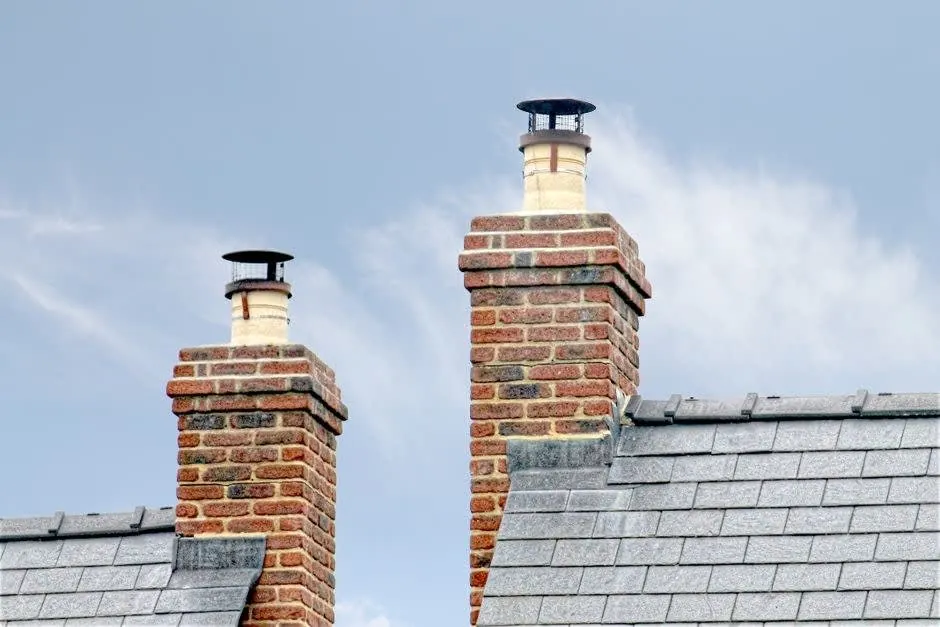
The noise usually starts around four in the morning in late May. By the time you are properly awake there is a fist-sized wedge of dried grass sitting in your hopper head, and a bird on the ridge daring you to do something about it.
Here is the awkward part. You cannot. Not lawfully, not once it has started, and not for a good few weeks afterwards either.
Herring gulls are what most Southport householders mean when they say seagull, and they have been nesting on roofs instead of cliffs since the 1940s. They are also in real trouble. Natural England put the fall in the UK breeding population at 60% in recent decades, which is why the herring gull sits on the red list rather than in the nuisance-bird bracket where most people file it. A declining protected species that is also emptying its nest into your rainwater goods is a frustrating combination to be on the receiving end of. So: what the law says, what the birds really cost you, and what works on a roof three streets from the dunes.
Why a Southport roof reads like a cliff ledge
A gull’s original site was a flat scrape on a cliff or a stack: sheltered on three sides, nothing able to climb to it, and a clear drop in front for take-off. A parapet roof gives it all three. So does a box gutter behind a coping, a flat-topped chimney flaunching, the well of a dormer cheek, and the corner of any flat roof with a bit of upstand around it. The RSPB’s advice on roof-nesting gulls notes that houses tend to attract herring gulls specifically, while lesser black-backed gulls go for the bigger flat expanses of industrial and commercial buildings.
Southport happens to supply every one of those shapes within a couple of miles of each other. The dune belt and the Ribble estuary sit on one side, the Sefton coast on the other, and behind them is a town whose housing is heavy on exactly what a gull is looking for: tall Victorian and Edwardian stacks around Churchtown and the Birkdale conservation streets, hidden parapet gutters on the older villas, seafront blocks with flat roofs and light wells, and long unbroken flat roofs on the trading estates inland. Food does the rest. Gulls have shifted inland as fishing patterns have changed and as towns have started providing easier meals, which is why the pair on a roof in Ainsdale might not go near the water from one week to the next.
The first sign is almost never the bird, though. It is water somewhere it should not be - a hopper overflowing in a shower that would not have troubled it last year, or a stain appearing on a bedroom ceiling in the middle of the driest month of the year. If your guttering in Southport is already carrying blown sand off the dunes, one nest is all it takes to tip the balance.
What the law says, and the phrase that catches people out
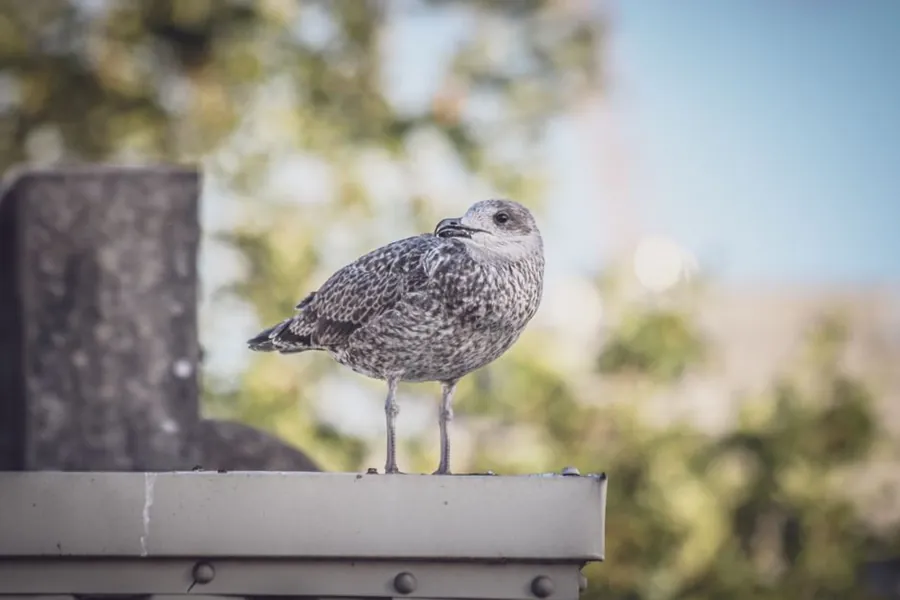
Every gull species in the UK is protected under the Wildlife and Countryside Act 1981. Section 1 of the Act makes it an offence to intentionally kill, injure or take any wild bird, to take or destroy an egg, and - this is the wording that trips people up - to take, damage or destroy “the nest of any wild bird while that nest is in use or being built”.
Being built. Protection does not wait for eggs to appear. From the moment a pair starts carrying material onto your roof, the nest is covered, which means the gap between noticing what they are up to and losing your right to interfere is measured in days rather than weeks. The RSPB adds that it is also an offence to prevent birds from reaching an active nest, so boarding over a light well with a sitting bird inside it is not the clever workaround it looks like.
And the reason people most often give for wanting a nest gone is the one the law specifically will not accept. The RSPB puts it plainly: simple nuisance or minor damage to property are not legally sanctioned grounds for killing gulls or removing active nests. Broken sleep, mess on the car, a blocked gutter - all real, none of them a defence. The herring gull’s red conservation status is a large part of why the bar sits where it does.
The damage a roofer actually finds up there
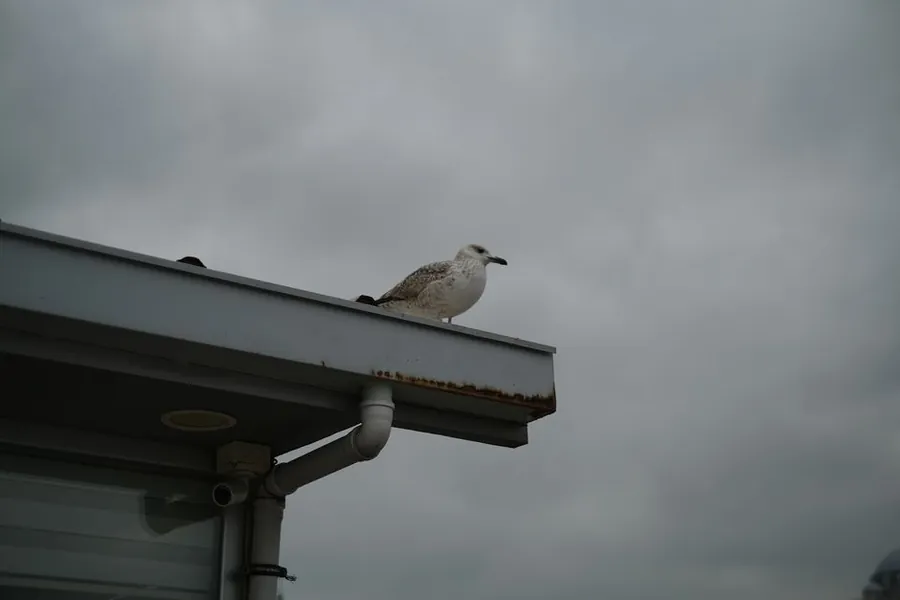
The birds themselves do remarkably little. It is what they carry up that generates the bills. Material goes on in armfuls over a fortnight or so, and the parents keep topping it up once chicks arrive. When that lot eventually slides off a ridge or gets pushed along a valley by the first heavy rain, it settles wherever the water was supposed to go: the outlet of a parapet gutter, the throat of a hopper, the bend at the head of a downpipe. Which is why gull trouble so often presents in midsummer as an internal leak rather than as anything you can see from the pavement - and why rainwater goods on this coast take such a hammering compared with the same fittings twenty miles inland.
Then there is the physical wear. A pair of adult herring gulls is a lot of bird to have landing, squabbling and pulling at one spot for three months. On older roofs they work loose ridge and hip mortar that was already tired, drag at slates that had started to slip, and lift the edge of felt where a flat roof meets an upstand. To be fair to the gull, it tends to find the weak point rather than create it. It just finds it very quickly.
Fouling is the one that quietly costs the most here. Droppings are acidic, and left sitting on lime mortar joints, lead flashings and painted rainwater goods they work at the surface steadily - alongside salt that is already doing the same job on a Sefton roof. Last comes the behaviour. The RSPB acknowledges dive-bombing where birds are defending nests and chicks, and any roofer who has been driven off a ridge on a Birkdale semi will tell you that is not a trivial detail. It decides whether a job can safely go ahead in July at all.
Timing: the only window that really works
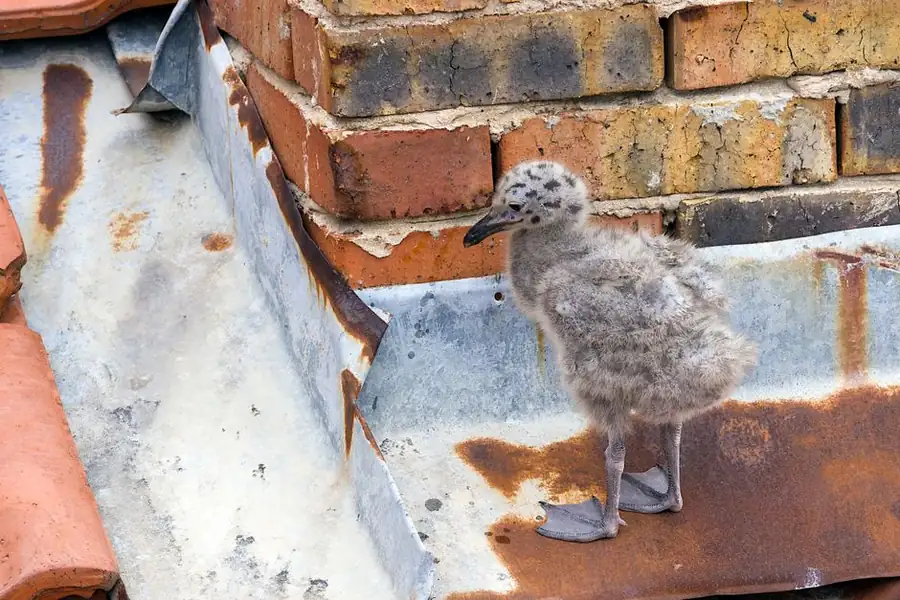
Because protection attaches the moment building starts, everything practical has to happen either side of the season. Pairs begin prospecting sites and carrying material up in early spring. Chicks are on the roof through early summer, and they stay dependent for a while after they first flutter down - the RSPB is clear that a juvenile gull sitting on the ground for a few days is normal development rather than an emergency, and that the parents carry on feeding and defending it.
In practice that leaves Southport homeowners a working season from late summer, once the birds have finished with the site and gone, through to the back end of winter. That is when you clear out the material, when you find out what was going on underneath it, and when proofing goes on. Leave it to March and you are gambling on getting scaffold up and the whole job finished before a pair commits to the ledge, which on this stretch of coast is not a bet worth taking.
It is worth folding into bigger plans too. If a re-roof, a chimney repair or a fascia replacement is on the cards anyway, doing the gull proofing on the same scaffold costs a fraction of what it costs as a standalone visit later. The access is the expensive part, not the wire.
Proofing that holds up on this coast
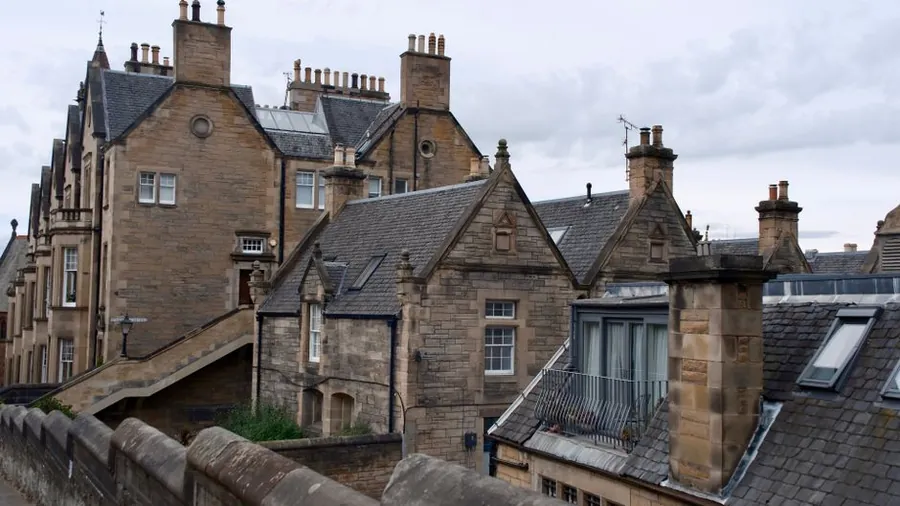
The useful news is that the proofing side is wide open to you. Natural England’s published advice on problem gulls states that preventative measures such as installing netting or wire over vulnerable roosting areas can be carried out without a licence from Natural England, alongside keeping waste secure and not feeding the birds. The only real condition is timing: nothing can be nesting when it goes up.
Four things earn their place on a domestic roof. Post-and-wire along ridges, hips and parapet copings is a tensioned stainless line on short posts, and it denies the landing perch without netting anything - it is also the least visible option from the street, which matters on a conservation-area frontage. Heavy-gauge gull spikes suit flat chimney flaunchings, dormer tops and parapet copings; the short, closely pitched pigeon spike sold in DIY shops will not trouble a herring gull. Netting works where there is a defined void to close off, such as a light well or a plant enclosure, and it has to be tensioned properly on stainless wire with no slack in it, because a sagging net traps birds and that is a welfare problem and a legal one at the same time. Finally, a cage or pot guard over a disused stack takes the single most popular ledge on a Victorian house out of use entirely.
Fixings are not a detail here. Galvanised brackets and mild steel wire on a roof near the dunes will bleed rust down a render face inside a couple of winters and let go of the fixing not long after. Stainless, grade A4 or 316, for the brackets and the wire both. It is a small uplift on the quote and it is the difference between proofing that lasts fifteen years and proofing you replace in four.
What does not work tends to be what gets sold hardest. Plastic owls and hawk kites buy you a fortnight; gulls are intelligent and they habituate to anything that does not move unpredictably. Reflective tape and holographic strips go the same way. Optical gels and sticky repellents are a ledge product borrowed from elsewhere - on a roof they load up with sand and grit, stop doing anything, and carry a real welfare risk if a bird gets stuck to one. Ultrasonic boxes are worse than useless, since birds are not notably sensitive to the frequencies they emit.
Licences, the council, and whose problem this is
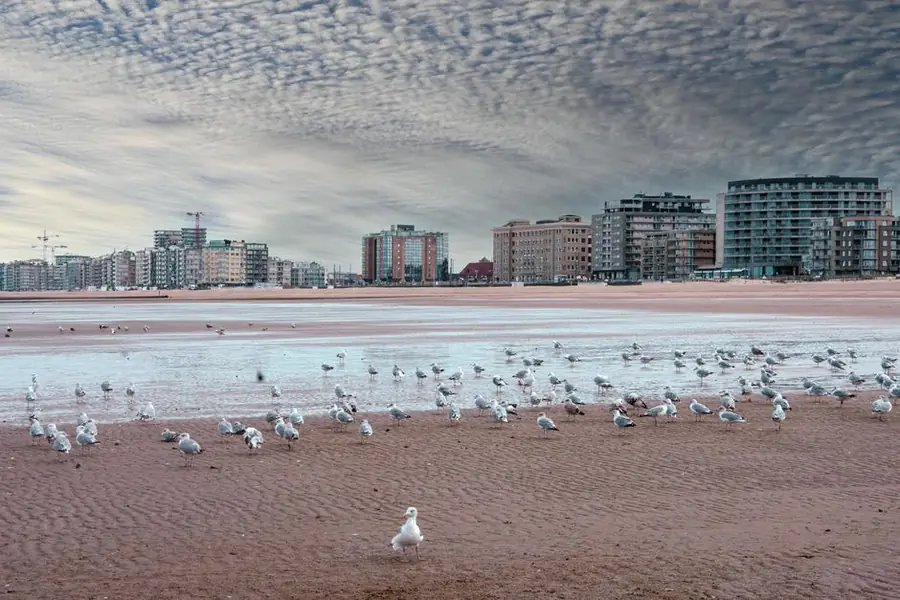
There is a licensing route, but it is narrower than most people assume and it is not a householder route. Licences allow nests to be destroyed, or birds to be killed, where there is no non-lethal solution and where it is needed to prevent serious damage to agriculture, stop the spread of disease, preserve public health and safety, or conserve other wild birds. Natural England is the licensing body in England, and acting outside the terms of a licence is a criminal offence.
For herring gulls the bar sits higher still. Natural England’s published position is that because the species is red-listed as a bird of conservation concern, lethal control is permitted only by obtaining an individual licence from Natural England, rather than through the general licence route that covers some other birds. In 2020 it scaled that licensing back further after assessing that the level of activity being carried out was above a sustainable level, citing the 60% fall in the herring gull breeding population and an estimated 48% decline in lesser black-backed gulls.
Nor is the council going to sort it out for you. Sefton Council’s domestic pest control service is priced for rats, mice, bed bugs, cockroaches, fleas, wasps and ants, and the page states outright that it does not deal with a list of animals including pigeons. Gulls do not appear on the treatment list at all. The roof is yours, so the problem is yours: a roofer can proof it, clear it once the site is empty and repair whatever got damaged, but nobody is coming out to take an active nest off your chimney.
Will your insurance pay for the damage?

Sometimes, and less often than people hope. Buildings insurance is built around sudden, accidental events: a storm strips a ridge, a branch comes through the roof. Gull damage is almost always the opposite shape. It accumulates over a season or several of them, which is precisely what gradual deterioration and lack of maintenance exclusions exist to keep out.
Two things are worth checking in your own policy wording rather than taking anyone’s word for it. First, whether there is a damage-by-animals or infestation exclusion, and whether it is drawn narrowly around vermin or broadly enough to catch birds. Second, how water ingress is treated when the underlying cause was a blocked gutter, because that is the most common route by which a gull costs you money and it is also the one an insurer will most readily label maintenance.
If you do intend to claim, the evidence has to exist before you tidy up. Photograph the blockage where it sits, photograph the ceiling stain with a date on it, and ask the roofer for a written cause note. “Nest material packed into the parapet outlet, water backed up over the upstand and through the ceiling” reads very differently on a claim form to “gutters were blocked”. Be honest with yourself about the maintenance record as well, because the first question back will be when the gutters were last cleared.
Terraces and semis: one untreated roof undoes the row
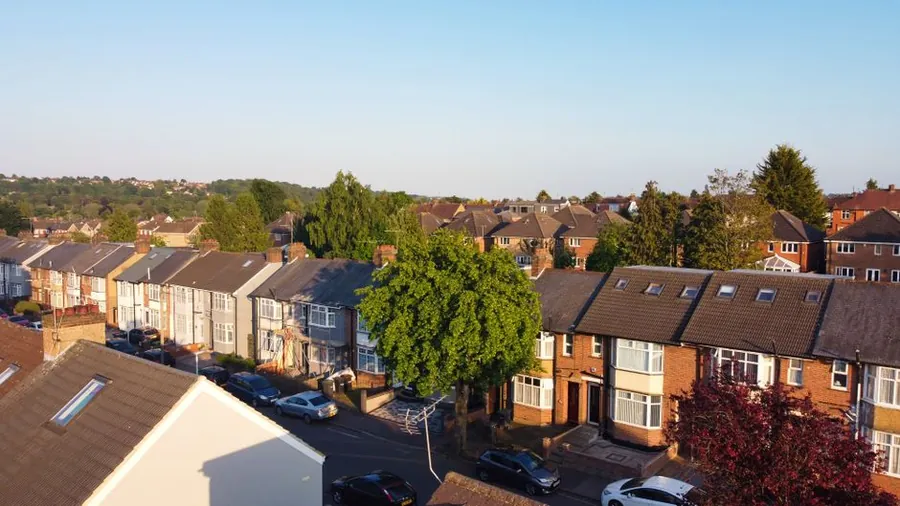
Gulls have no interest in your party wall. Southport’s terraces and semis share ridges, share stacks and in plenty of cases share a parapet or box gutter that runs straight over the boundary line. Spike your half of a shared ridge while the house next door does nothing and you have not solved the problem, you have relocated it eight feet sideways onto a roof that drains into the same run of gutter as yours.
The sensible answer is the one nobody enjoys, which is talking to the neighbours before you book anything in. Proofing three or four houses in one go is considerably cheaper per house than doing them one at a time, because the money is mostly in scaffold and access rather than in wire and brackets. One set of scaffold, one mobilisation, one visit. On a terrace where the only route to the rear is a shared back entry, that is often the only way the job happens at all.
It also heads off the argument that comes afterwards. Where a shared stack or a shared gutter is involved the repair bill really is a joint one, and that is a far easier conversation to have in October with nothing nesting than in June with water coming through somebody’s back bedroom. If the neighbours will not engage, proof your own roof anyway. It will not clear the street, but it takes your stack, your parapet and your ridge out of contention, and gulls settle where the going is easiest.
Frequently Asked Questions
A pair of gulls has started building on my chimney stack. How long have I got?
Realistically, no time at all. Section 1 of the Wildlife and Countryside Act 1981 protects the nest of a wild bird while it is in use or being built, so the protection attaches from the first beakful of material rather than from the first egg. Once a pair has committed to a stack, the lawful options are to leave them to it and plan the work for after they have finished and gone. If you spot birds circling and sizing up a stack but nothing has been carried up yet, that is the moment to get proofing booked, not a fortnight later.
Do I need a licence to fit gull spikes, wire or netting on my roof?
No. Natural England's published advice states that preventative measures such as installing netting or wire over vulnerable roosting areas can be carried out without a licence from Natural England. The licensing regime covers destroying nests and killing birds, not physically making a ledge unattractive to land on. The only condition that really matters is timing: proofing has to go up when nothing is nesting, because blocking a bird's access to an active nest is itself an offence.
Will Sefton Council come and remove gulls from my roof?
No. Sefton's domestic pest control service is set up for rats, mice, bed bugs, cockroaches, fleas, wasps and ants, and the council states that it does not handle a list of animals that includes pigeons. Gulls are not on the treatment list at all. Your roof is your responsibility, so the practical route is a roofer who will clear the debris once the site is empty, repair whatever the nest was sitting on, and fit proofing before the following spring.
When is the best time of year to gull-proof a roof in Southport?
Autumn through to the back end of winter. By late summer the birds have finished with the site and moved on, which means a roofer can strip out the old nest material, see what has been damaged underneath it and fit wire, spikes or a stack cage without any legal complication. Leave it until March and you are betting on getting scaffold up and the job finished before a pair commits to the ledge, which on a busy coastal stretch is not a bet worth taking.
Free Roof Survey & Quote
Free roof survey and a fixed written quote, anywhere across Southport, Sefton and West Lancashire.