
20 August 2026
The Chimney Did It: Stack Leaks, Repointing And When To Take It Down
More Southport leaks start at the chimney than anywhere else on the roof. Where the water gets in, what repointing really costs, and the questions to settle before you have a stack removed.
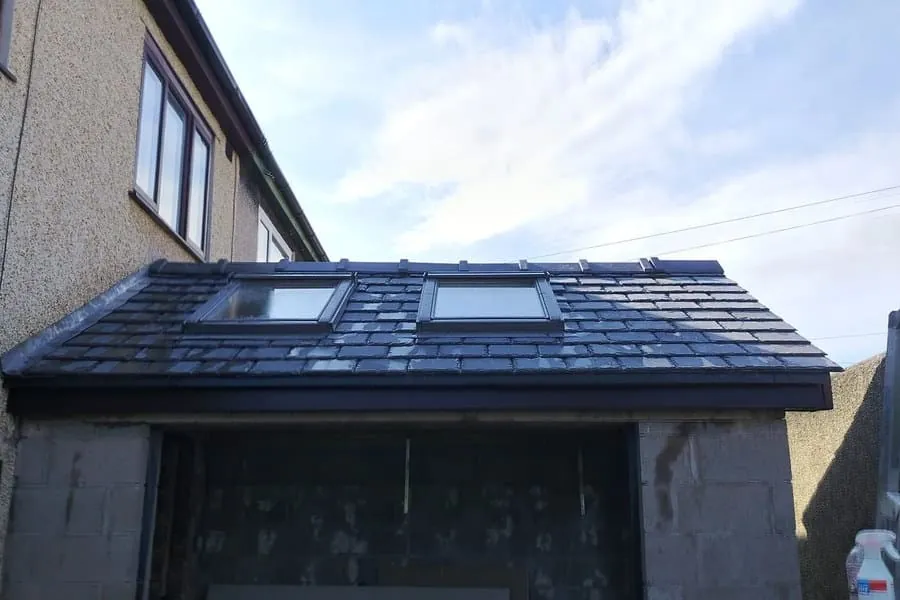
Ask a roofer where they would look first for the source of a leak on an older Southport house and most will say the chimney before you have finished the sentence. It is the most exposed masonry on the building, wetted on all four sides instead of one, and it punches a hole clean through the covering that has to be sealed with lead rather than tiles. On a Victorian terrace off Lord Street the stack can stand two metres above the ridge with nothing in front of it but the Irish Sea. Add sixty or a hundred and twenty years of soft mortar, salt-laden westerlies and jackdaws, and the wonder is that any of them are watertight at all. Here is what fails, in what order, and what the fixes actually cost.
Why the stack goes first
Everything about a chimney is harder work than the roof around it. Rain hits it from every direction, including underneath when the wind is gusting off the coast. It cannot shed water sideways the way a slope does, so mortar joints stay wet for days. It gets colder and hotter than the roof, since it is brick standing in open air with no loft behind it, and that movement opens joints that a wall inside a building would keep closed.
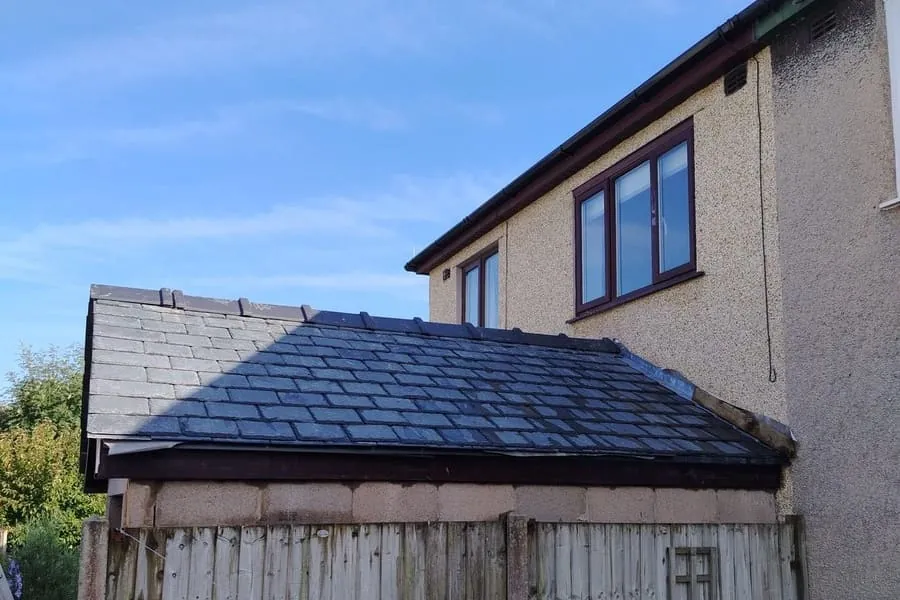
Southport adds two of its own. Salt carried inland on the prevailing wind gets into the pores of soft brick and lime mortar and works away at both, which is why stacks on west-facing gables here look a decade older than the ones tucked behind a ridge on the same street. And the tall, narrow stacks on the older housing were built for coal fires that stopped burning fifty years ago, so nothing warm has passed up the flue since - a cold, damp, unused chimney weathers faster than a used one. Most of the chimney repairs in Southport we are called out to are on stacks nobody has lit a fire in since the seventies.
Six places the water actually gets in
The brickwork gets the blame and it is usually innocent. These are the six, in rough order of how often we find them.
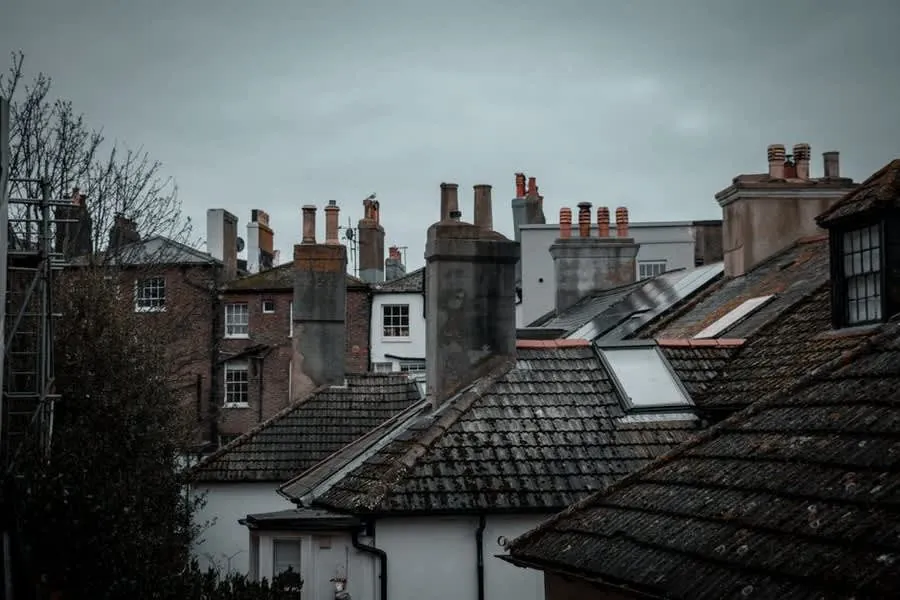
The front apron, the piece of lead that turns down over the tiles on the downhill side, lifts or splits at its edge. The side flashings - stepped lead let into the mortar joints, working with soakers under the slates - pull out of the brickwork or get bedded back in with the wrong stuff. The back gutter, the tray behind the stack where the roof slope meets it, fills with debris and rots out, and this is the worst of the lot because it sits where water naturally collects. The flaunching, the sloped mortar cap holding the pots, cracks and lets water run straight down the outside of the flue. Open pots with no cowl take rain directly into an unlined flue, which shows up as damp in a bedroom chimney breast that no one can trace. And genuinely porous or spalled brick on the weather face, once the mortar has gone, will pass water through the stack itself.
The reason chimney leaks get misdiagnosed so often is that the water rarely appears where it came in. It runs down the outside of a flue or along a rafter before it drops, which is exactly the problem we set out in our piece on why a leak keeps coming back after being repaired. Find the entry point, not the stain.
Lead, and the cement fillet that will not do
A chimney should be flashed in lead. Code 4 is the normal weight for domestic flashings, dressed into the mortar joints and wedged, then pointed. Done properly it lasts as long as the roof does, moves with the building rather than fighting it, and can be lifted and re-dressed later if the covering is renewed. The Lead Sheet Training Academy publishes the detailing standards, and a good roofer will happily tell you which code they are using before they start.
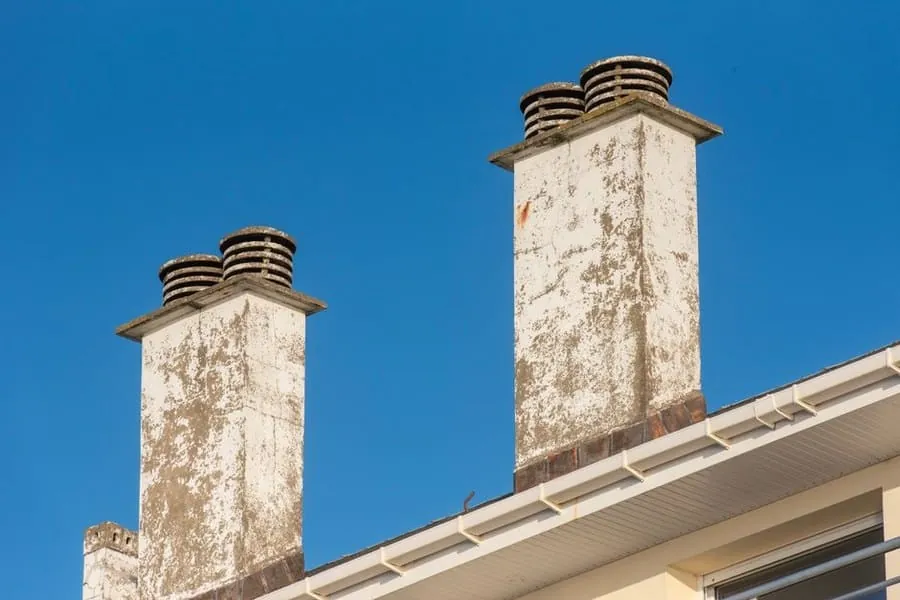
What you will meet instead, on maybe a third of the stacks we survey, is a cement fillet: a triangular smear of sand and cement where the lead should be. It is quicker and cheaper, it looks tidy for about two years, and then it cracks - because brick, mortar and roof tile all expand at different rates and cement has no give in it. Once it has cracked it holds water against the stack rather than shedding it, so the fillet does more damage than no flashing at all.
The same goes for the tins of black bitumen paint and the aerosol seal-in-a-can that get slapped round chimneys after a wet week. They stick to a wet, dirty surface just long enough to hide the fault, then peel. If your stack has been treated that way, whatever is underneath has usually been getting wet ever since.
Repointing a Southport stack: soft brick, hard mortar, access
Repointing is exactly what it sounds like - raking out the failed mortar joints and filling them properly. The two things that decide whether it is a twenty-year fix or a five-year one are the mix and the access.

Victorian and Edwardian stacks round here were built with soft handmade brick and lime mortar, and the mortar was meant to be the sacrificial part - softer than the brick, so moisture escapes through the joints and any movement is taken up there. Point that brickwork in a strong modern cement and you reverse the arrangement. The joint becomes harder than the brick, water leaves through the brick face instead, and in a freeze the brick face blows off rather than the mortar. That is what spalled, crumbling brick on an otherwise neat-looking stack means: someone pointed it in the wrong material. On the coast, where the brick is already carrying salt, it happens faster.
The other half of the bill is getting up there. A stack on a low bungalow might be reachable from a tower. A three-storey stack on a Promenade villa needs a proper scaffold, and that scaffold costs the same whether the mason is up there for one day or four. This is why it is worth doing the flashing, the flaunching and the pointing in one visit if any two of them are due - the expensive part is already standing.
The stack you no longer use: cap it, but let it breathe
Most Southport chimneys are now decorative. The temptation is to seal the top and forget it, and that is precisely how you turn a dry chimney into a damp one.
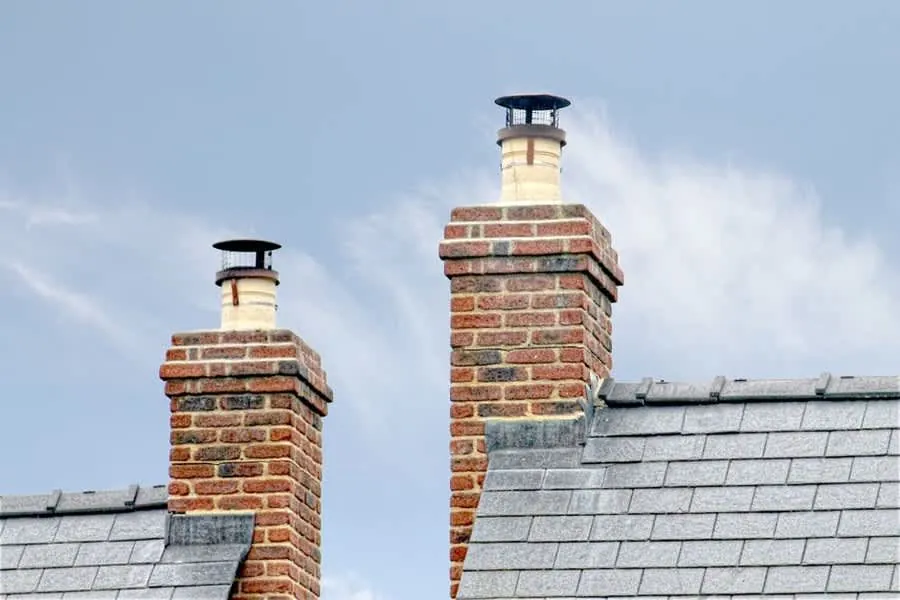
A flue holds air, soot and old moisture, and the masonry around it absorbs rain. Seal both ends and that moisture has nowhere to go, so it condenses inside the flue and comes out through the chimney breast in the bedroom as a patchy stain with a faint tang of soot. The right approach is a capping that keeps rain out while letting air move - a ventilated cowl or a capping pot at the top, and a small vent or airbrick at the fireplace below, so there is a gentle through-draught up the flue.
If the stack still serves anything that burns - a gas fire, a stove, a back boiler - none of this is a roofing decision. Working flues fall under the rules for combustion appliances, and a solid fuel appliance should be checked by a registered installer; HETAS keeps the register for solid fuel work. Capping a live flue is dangerous, not just non-compliant. If you are not certain whether the flue is dead, treat it as live until somebody competent confirms otherwise.
Taking it down: above the roof, or all the way
There are two very different jobs here. Removing the stack above roof level means taking the brickwork down to below the tiles and weathering the roof over the hole, which is straightforward and often the sensible end of the road for a badly decayed stack. It typically costs less than rebuilding it. The catch is the flue below, which now needs capping and venting exactly as described above, and the chimney breast that remains in the rooms.
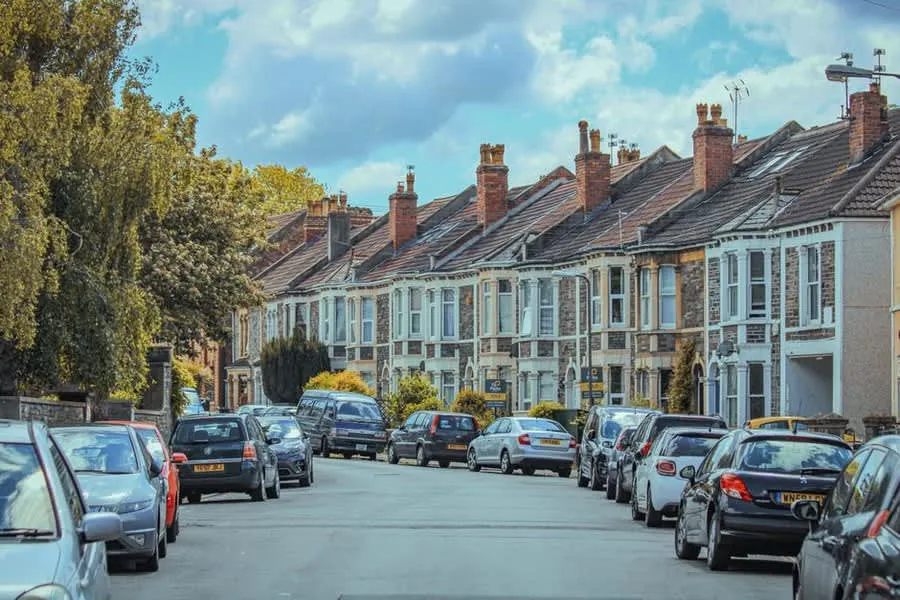
Removing the breast as well is a structural job, not a roofing one. Whatever is above the section you remove has to be supported, that support has to be designed rather than guessed at, and the work is notifiable to building control. Get it wrong and you leave a tonne of masonry resting on nothing much, which is how upper-floor breasts end up cracking ceilings.
Then there is the neighbour. On a terrace or a semi, the stack is very often shared, sitting on the party wall with your flues on one side and theirs on the other. That makes it a party structure, so the work falls under the Party Wall etc. Act 1996 and your neighbour needs formal notice, usually two months before you start. Skipping that step is how a straightforward job turns into a dispute with the people you share a wall with for the next twenty years. Settle it before anybody books a skip.
What to look at from the pavement
You can assess a stack surprisingly well from the ground with a pair of binoculars on a dry day, standing far enough back to see the whole thing.
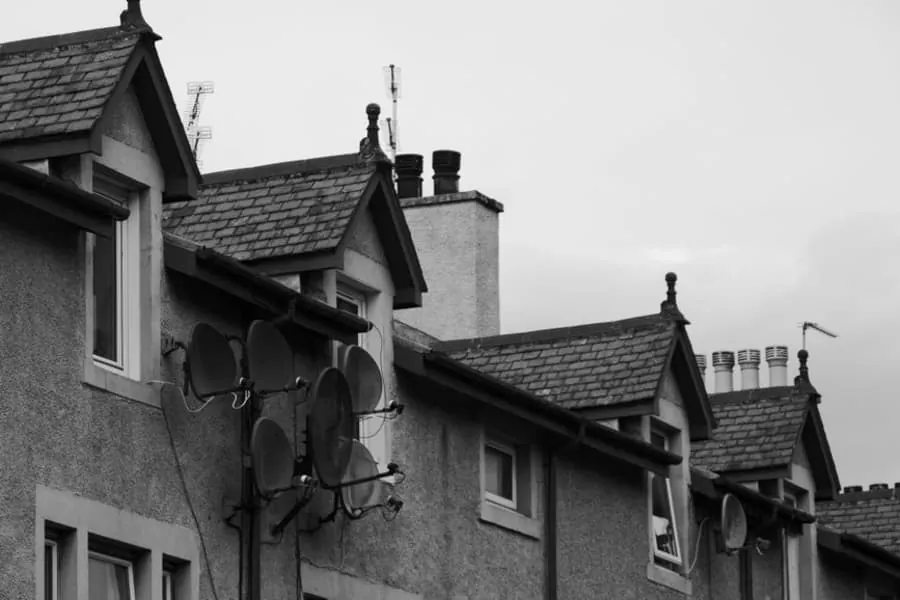
Look at the mortar joints on the weather side and compare them with the sheltered side - deeply recessed or missing joints on one face tell you how much longer the rest has. Then the top: is the flaunching cracked, is a pot leaning, has anything green taken root up there? Sight the stack against something you know is vertical, a downpipe will do. A lean means movement, and movement means something below it is failing. Check for the tell-tale grey triangle of a cement fillet where the lead should be. And inside, check the chimney breast in the top bedroom for staining, and put your hand on the wall in a cold spell.
None of that gives you a diagnosis, but it tells you whether to worry. If you are seeing two or three of them at once, get it surveyed before winter - stacks are one of the few parts of a roof that fail in a way that can drop bricks onto a garden. We look at chimneys free across Southport, Birkdale, Formby and out into West Lancashire, and you get a written quote setting out what needs doing now and what can wait.
Frequently Asked Questions
Why does my chimney leak when it rains?
Nine times in ten it is the junction between the stack and the roof rather than the brickwork itself. A chimney interrupts the roof on four sides, so it needs a lead apron at the front, stepped flashing and soakers up the sides and a back gutter behind it. If any of those has slipped, split or been replaced with a cement fillet, water goes straight in. The other common culprits are open pots with no cowl and mortar flaunching that has cracked apart on top.
How much does it cost to repoint a chimney stack?
In Southport, £400 to £1,200 for a typical stack, with access making up a good share of that. Renewing the flaunching and resetting the pots usually runs £250 to £500, and new lead flashing all round is around £350 to £700. Rebuilding a stack from roof level upwards is a bigger job at £1,200 to £3,000, and the scaffold is a real part of the figure rather than an add-on.
Should I remove a chimney I never use?
Not automatically. A sound, capped, ventilated stack costs nothing to own and takes a feature off the roofline if you lose it - which matters on the Victorian terraces around Churchtown where every other house still has one. Removal makes sense when the stack is badly decayed, when it is a chronic source of damp, or when you want the space the breast takes up inside. Capping with a ventilated cowl is often the cheaper and better answer.
Do I need permission to remove a chimney stack on a terraced house?
Very likely. Stacks on terraces and semis are usually shared with next door, which makes the work a party structure matter under the Party Wall etc. Act 1996, and your neighbour has to be served notice - normally two months ahead for work to a party structure. Removing a chimney breast is also structural, so it is building regulations work and needs sign-off from Sefton Council or West Lancashire building control depending on where you are.
Free Roof Survey & Quote
Free roof survey and a fixed written quote, anywhere across Southport, Sefton and West Lancashire.